
The American Bobtail enters the Cats Judging Humans files with a profile that is unusually charitable toward humanity. The canonical appearance identity describes a medium-to-large, sturdy cat with a naturally shortened expressive tail, broad head, and shaggy, wild-looking coat. The temperament summary is equally clear: confident, adaptable, intelligent, and playful, with a generally easygoing temperament. The human relationship summary adds a social dimension, describing the breed as often affectionate and family-oriented, typically enjoying interaction without needing constant attention.
The score pattern supports that broad picture. Adaptability and family friendliness both sit at 5, while activity, affection, human friendliness, playfulness, sociality, and stranger tolerance are all scored at 4. Attention need and independence are both 3, grooming is 2, and vocality is 2. That combination does not read like a breed profile built around extremes. Instead, it suggests a cat that can be engaged and social while still allowing some room for ordinary household life to continue without constant intervention.
The Cats Judging Humans editorial layer takes those broad tendencies and turns them into a Human Compatibility Report. The judgment score is 2, labeled Low to Moderate. Human nonsense tolerance is 4, labeled Strong. Complaint frequency is 2. Supervision tendency is 4. Those CJH metrics are explicitly humorous interpretations, not scientific measurements. The official verdict is the cleanest summary: the American Bobtail generally approves of humans and is willing to overlook a surprising amount of household nonsense. For this brand, that is practically a standing ovation.
The American Bobtail at a Glance: Sturdy, Expressive, and Easygoing
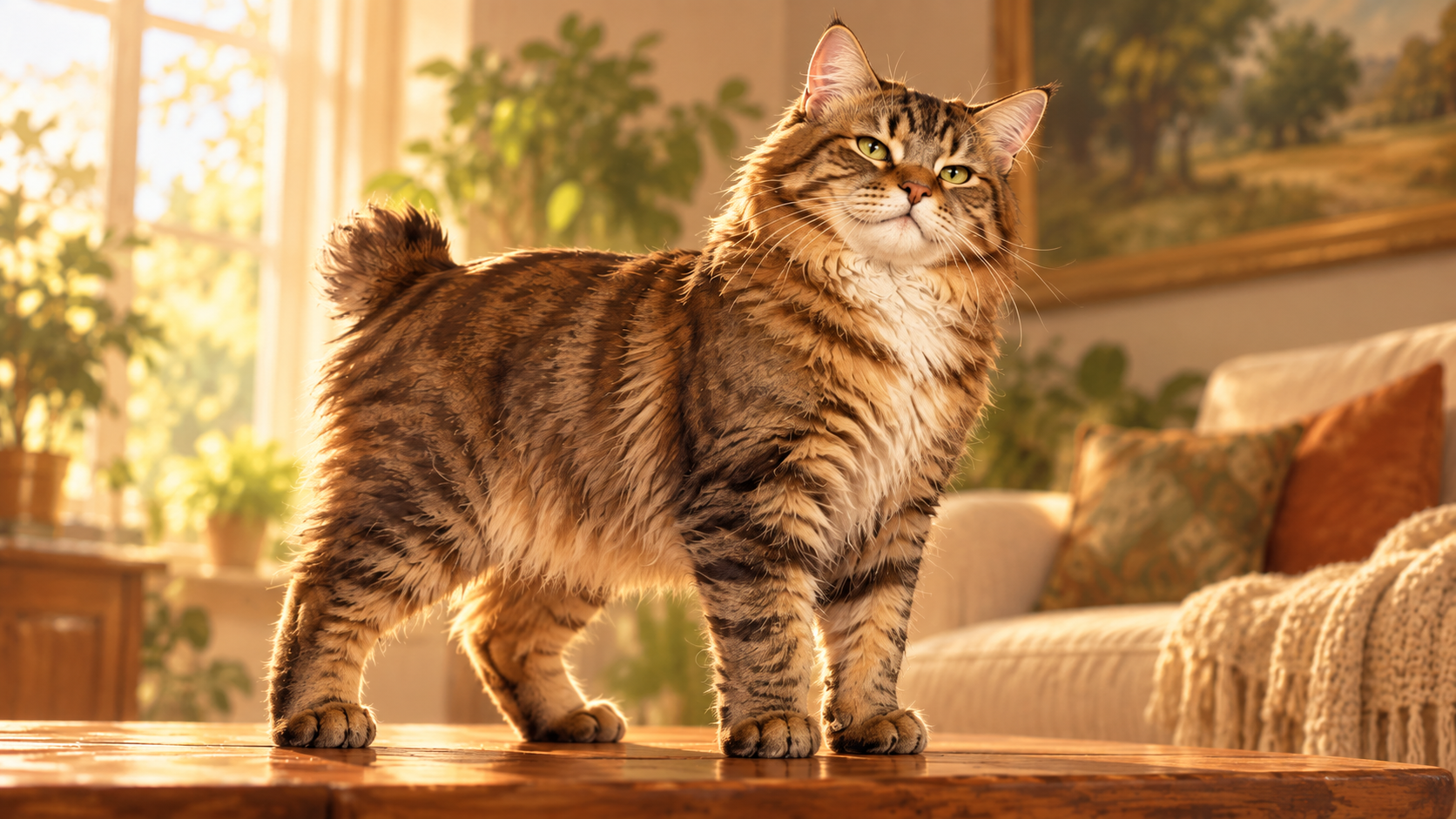
The most useful place to start is with the overall balance of the profile rather than with any single score. The American Bobtail is described as medium-to-large and sturdy, with a naturally shortened expressive tail, a broad head, and a shaggy, wild-looking coat. Those visual traits give the breed a strong physical identity in the dataset, while the temperament summary emphasizes confidence, adaptability, intelligence, playfulness, and a generally easygoing disposition.
That combination is important because the profile does not frame the breed as intense in only one direction. Activity is strong at 4, but not at the top of the scale. Playfulness is also 4. Human friendliness, affection, sociality, and stranger tolerance are all 4, while family friendliness and adaptability reach 5. The overall picture is socially positive and engaged without suggesting that every interaction must become a full-scale event.
The human relationship summary reinforces that moderation. It says the breed is often affectionate and family-oriented, typically enjoying interaction without needing constant attention. That sentence gives the article a useful anchor because it prevents the common mistake of equating affection with endless demand. The source describes connection, but it also leaves room for independence and ordinary household rhythm.
Cats Judging Humans translates that profile into a remarkably forgiving authority figure. The American Bobtail looks like it could preside over a household tribunal, but the judgment metrics suggest that the tribunal is not especially eager to convict. Low-to-Moderate judgment, Strong nonsense tolerance, and relatively low complaint frequency create a comic image of a cat that notices what humans are doing but often decides not to escalate the matter.
That is editorial interpretation, not a breed fact. The factual basis remains the supplied scores and summaries. Still, as a breed-level portrait, the American Bobtail comes across as confident, engaged, and socially comfortable enough to let humanity retain limited operating privileges.
A Wild-Looking Coat Does Not Equal a Wild Temperament
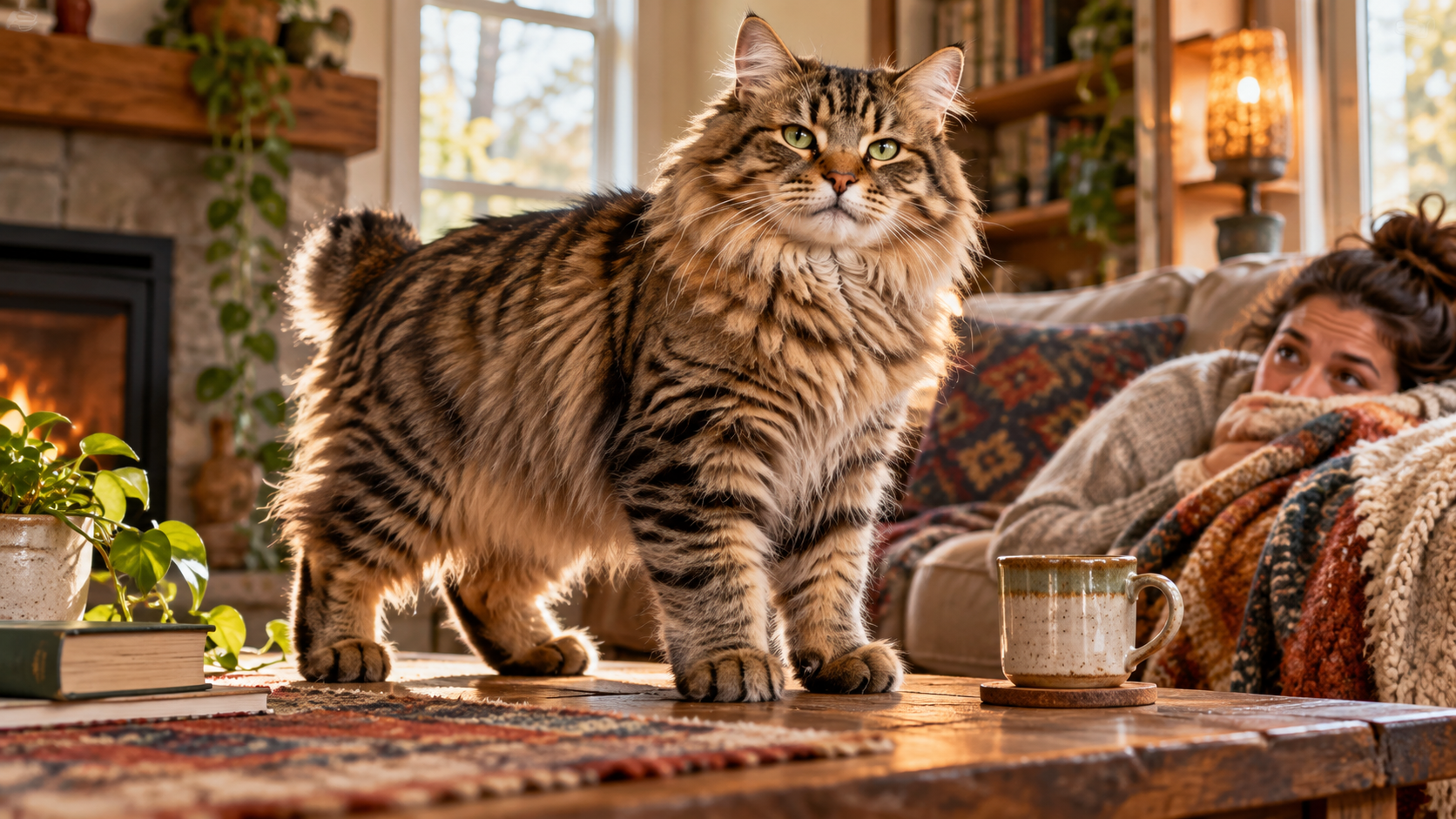
The appearance identity uses the phrase “shaggy wild-looking coat,” which gives the American Bobtail a visually rugged quality. It would be easy to let that wording pull the entire article toward assumptions the source does not support. That would be a mistake. The temperament summary does not describe the breed as volatile, distant, or severe. Instead, it says confident, adaptable, intelligent, playful, and generally easygoing.
That contrast between appearance and temperament is one of the most interesting editorial angles in the profile. A cat can look rugged while still being socially positive and easygoing in the broad tendencies represented here. The visual identity and the temperament data should therefore be read together without forcing one to dictate the other.
The strong family friendliness score of 5 and human friendliness score of 4 are especially useful in keeping that distinction clear. So is the relationship summary, which describes the breed as often affectionate and family-oriented. Nothing in the canonical data suggests that the wild-looking coat should be interpreted as a behavioral warning.
Cats Judging Humans would describe the situation this way: the exterior says frontier marshal; the internal paperwork says surprisingly reasonable coworker. That is a joke, not a scientific claim. It simply highlights how visual drama and social temperament can coexist without contradiction.
The expressive shortened tail also adds character to the appearance identity without authorizing any specific behavioral claim. It is part of what makes the breed visually distinctive in this dataset. The article can acknowledge that identity while remaining disciplined about what the source actually says.
For readers, the larger lesson is useful beyond this one breed: physical appearance and broad temperament should not be collapsed into one assumption. The American Bobtail profile looks rugged on paper and still reads as one of the more socially tolerant profiles in the CJH framework.
Adaptability Is One of the Strongest Signals in the Profile

Adaptability is scored at 5, making it one of the clearest strengths in the canonical data. That score is consistent with the temperament summary, which explicitly describes the American Bobtail as adaptable. Because both the prose summary and the numerical profile point in the same direction, adaptability deserves more than a passing mention.
The source does not define exactly how adaptability appears in every environment, and the tendency disclaimer matters here. Individual cats vary with genetics, socialization, age, health, environment, and experience. So a score of 5 should not be turned into a promise that any particular cat will respond easily to every change, visitor, schedule adjustment, or household event.
What the score does support is a broad breed tendency toward flexibility. That flexibility sits beside strong sociality, strong human friendliness, strong stranger tolerance, and very high family friendliness. Together, those fields create a picture of a breed profile that is socially robust rather than brittle.
Cats Judging Humans finds this highly suspicious in the best possible way. A cat that adapts well can continue judging the household under a wider range of operating conditions. New arrangement? Fine. Human improvisation? Possibly acceptable. Procedure changed without notice? The cat may simply update the file and keep going.
Again, that is playful editorial framing, not a behavioral guarantee. The factual statement remains simple: adaptability is a top-scoring trait in the supplied profile. The value of the joke is that it turns the score into a memorable image without pretending to know more than the source provides.
For human readers, adaptability should therefore be understood as one of the defining tendencies in this profile, but always with the individual disclaimer intact. The dataset gives the American Bobtail a strong capacity for adjustment. The individual cat still retains full authority to approve or reject specific circumstances.
Family Friendliness Is the Highest Social Score
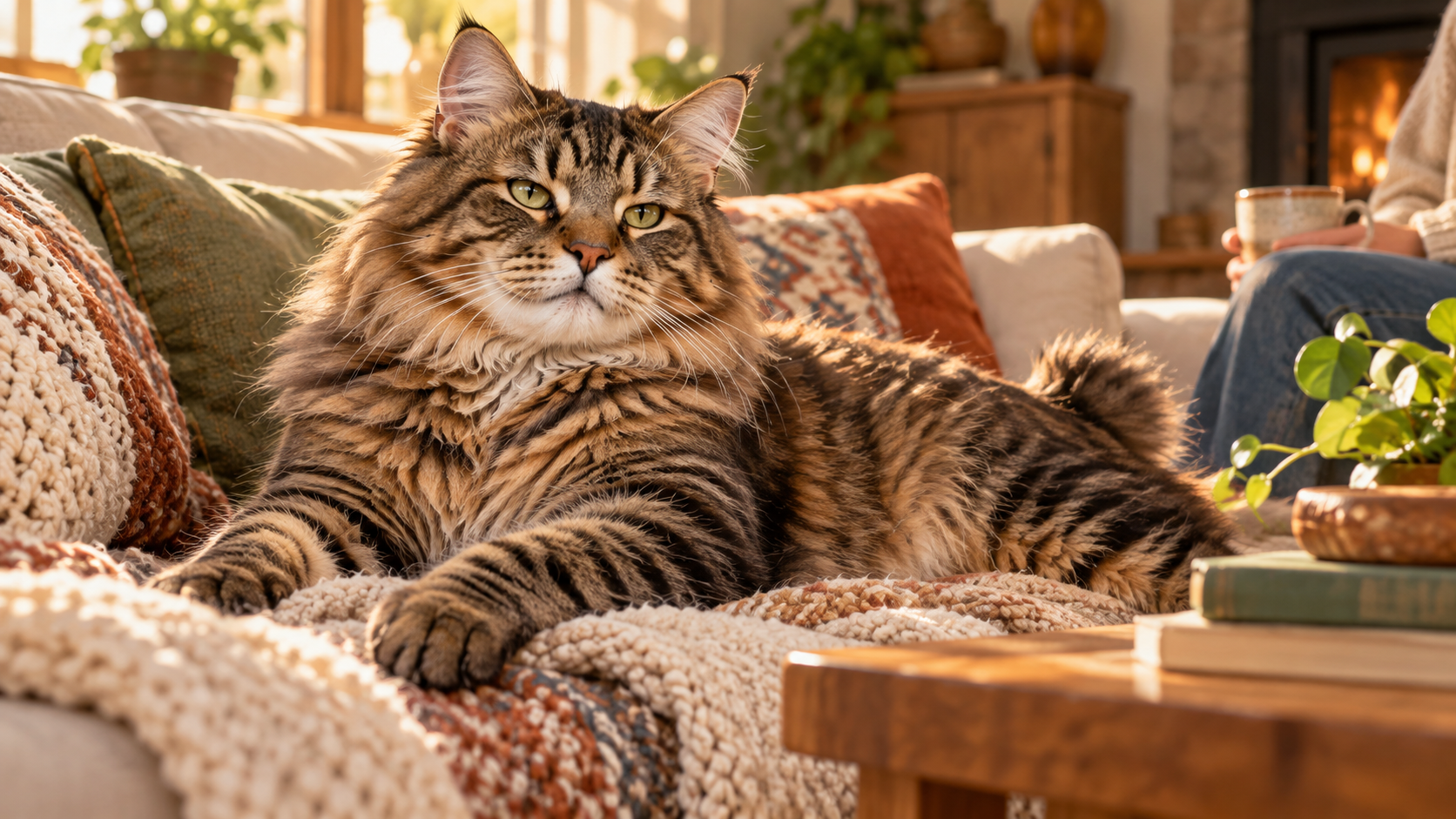
Family friendliness is scored at 5, the highest social score in the American Bobtail profile. That matters because it gives the human relationship summary additional context. The source says the breed is often affectionate and family-oriented, and the family friendliness score supports that description directly.
This does not justify inventing detailed claims about specific household compositions, children, other animals, or family routines. The source does not provide that level of detail. What it does support is a broad tendency toward family orientation and social comfort within familiar household relationships.
Human friendliness is also strong at 4, while sociality is 4 and affection is 4. Those scores make the family friendliness result feel like part of a larger pattern rather than an isolated number. The American Bobtail profile is socially positive across multiple fields.
Cats Judging Humans turns that into an unusually lenient domestic hierarchy. The family is not automatically competent, of course. That would be an irresponsible conclusion. But the breed’s editorial verdict suggests that humans may be granted continuing access even after minor procedural failures.
The official CJH line says the breed generally approves of humans and is willing to overlook a surprising amount of household nonsense. That verdict fits the family-friendly profile without becoming a literal temperament diagnosis. It is a branded way of saying that the supplied tendencies lean toward social acceptance rather than relentless criticism.
The important nuance is that family friendliness is a breed-level tendency, not a guarantee about an individual cat’s relationship with every person. The source disclaimer remains active here, especially because socialization, age, environment, and experience are specifically named as factors that can shape the individual.
Still, within the canonical data, family friendliness is not a footnote. It is one of the strongest signals available. For Cats Judging Humans, that means the household may be under supervision, but it is not necessarily under indictment.
Affection Is Strong Without Requiring Constant Attention
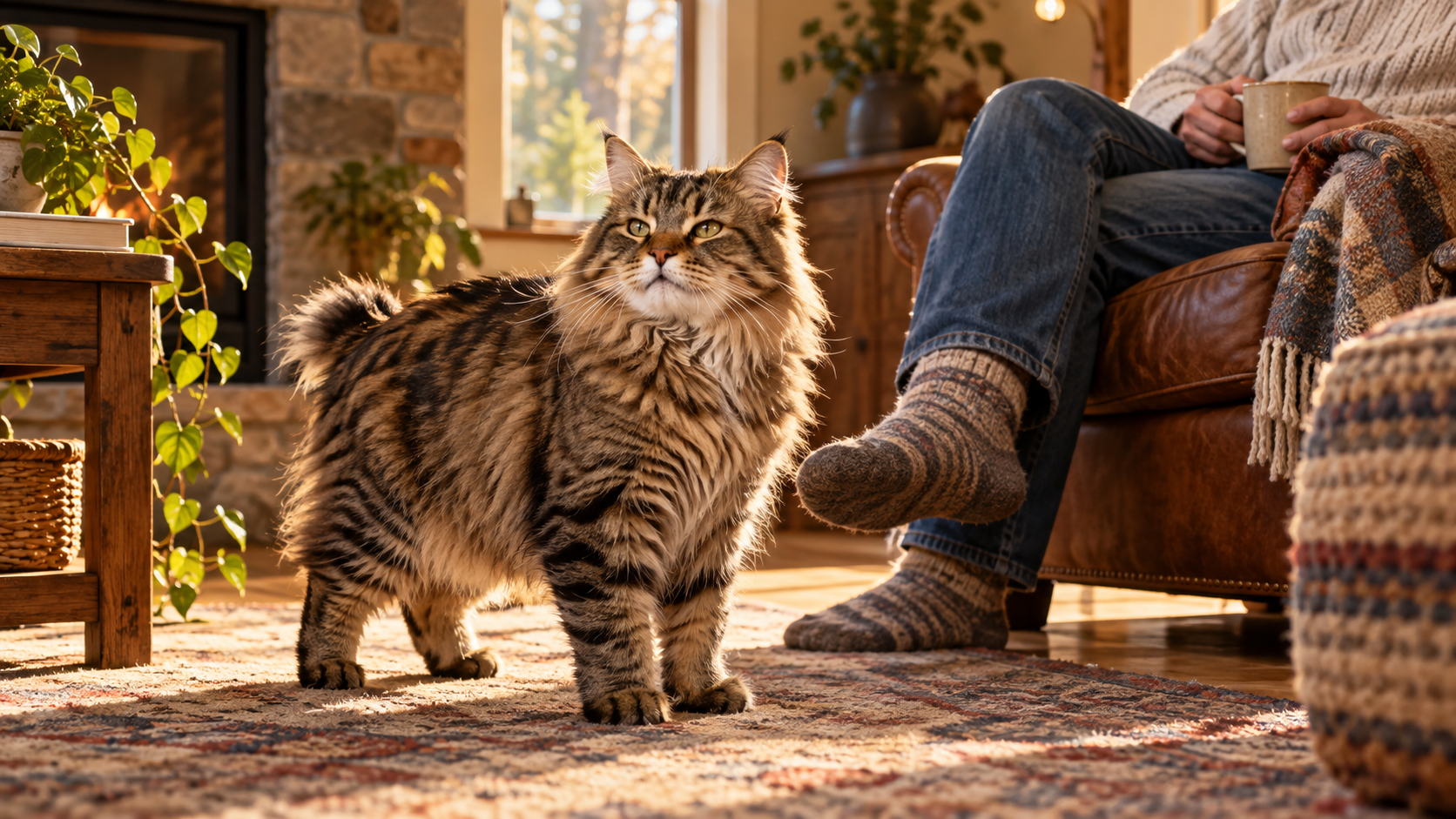
Affection is scored at 4, which places it among the stronger tendencies in the dataset. The human relationship summary gives that score a particularly useful interpretation: American Bobtails are often affectionate and family-oriented, typically enjoying interaction without needing constant attention.
That sentence prevents the article from flattening affection into one narrow model. The source does not say that affection requires nonstop contact, constant lap time, or continuous human availability. Instead, it describes a socially connected cat that can enjoy interaction without making attention the defining demand of the profile.
The attention need score of 3 reinforces that balance. It is neither especially low nor especially high. Placed beside affection 4, the combination suggests that strong bonds and moderate attention need can coexist. That is a more nuanced picture than a simple label like “needy” or “independent.”
Cats Judging Humans translates this arrangement into a generous service policy: the human is appreciated but not necessarily required to remain on standby every minute. That is editorial humor, but it is grounded in the source’s contrast between affection and moderate attention need.
This is also a useful reminder that social connection is multidimensional. Affection, human friendliness, sociality, attention need, independence, family friendliness, and stranger tolerance are separate fields in the profile. The American Bobtail does not score identically across all of them, which is exactly why the profile feels balanced.
The tendency disclaimer remains essential. An individual cat may seek more or less interaction than the breed-level profile suggests. Health, age, environment, socialization, and experience can all matter. The article therefore stops short of predicting exact behavior.
The source gives us enough to say that affection is strong and constant attention is not the defining requirement. The CJH department interprets this as excellent news for humans who occasionally need to answer an email without feline oversight.
Playfulness and Activity Keep the Profile Engaged
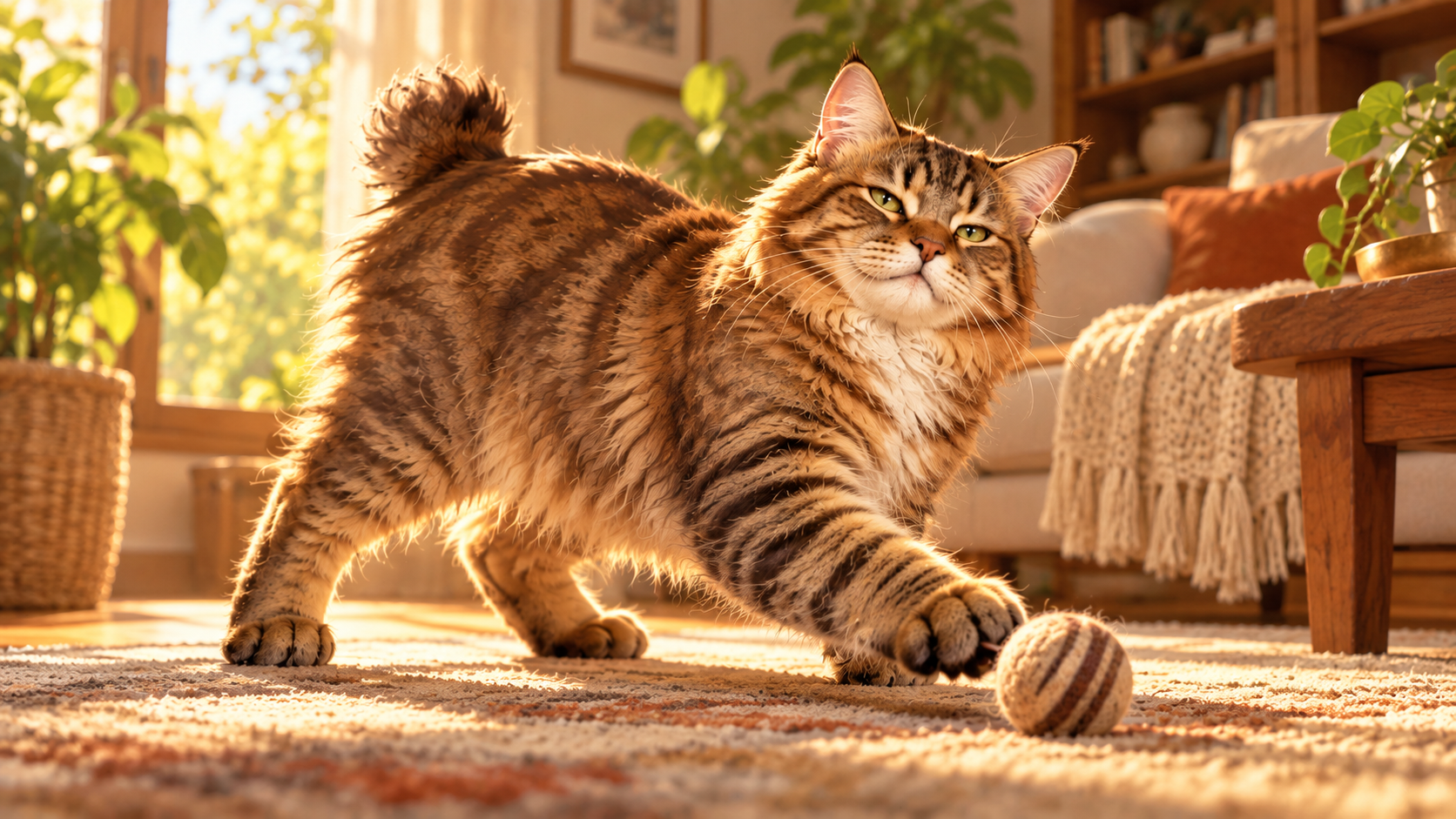
Playfulness and activity are both scored at 4, which places them among the stronger tendencies in the American Bobtail profile. The temperament summary also describes the breed as playful, adding prose support to the numerical score. Together, those fields suggest a cat profile that is engaged and lively rather than sedentary or detached.
The source does not identify specific games, exercise routines, toys, climbing habits, or play styles, so this article should not invent them. The responsible factual statement is simply that playfulness and activity are both strong tendencies in the dataset.
Those scores become more interesting when viewed alongside the human relationship summary. The breed is often affectionate and family-oriented, enjoys interaction, and does not typically require constant attention. That combination suggests that engagement can be meaningful without being relentless.
Cats Judging Humans interprets this as a cat that is willing to participate in household operations but does not necessarily require a full-time entertainment department. The human may still be expected to remain useful. The standards are simply more reasonable than in some other internal reports.
The activity score also helps keep the “easygoing” temperament description from being misread as inactive. Easygoing does not mean motionless. The source presents a cat that can be both active and generally relaxed in temperament. Those qualities are not contradictory.
This is one of the broader themes of the profile: balance. Strong activity sits beside high adaptability. Strong playfulness sits beside moderate attention need. Social strengths sit beside moderate independence. The American Bobtail profile rarely looks extreme in only one direction.
For the CJH verdict, that balance creates an appealing character: interested enough to be involved, playful enough to keep the household alert, and easygoing enough that minor human failures may not trigger a formal investigation.
Confidence and Easygoing Temperament Can Coexist
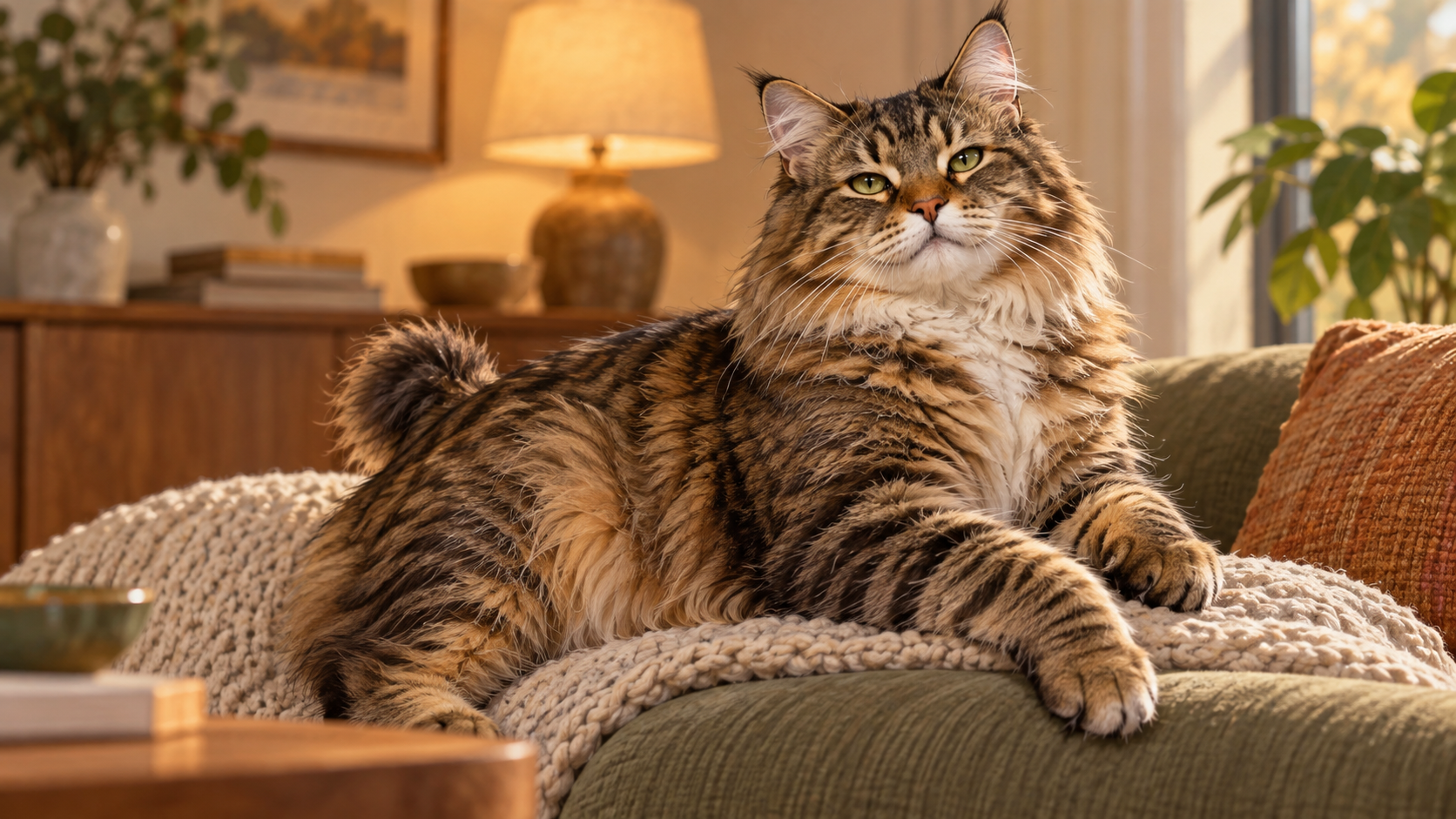
The temperament summary uses two descriptors that are especially interesting together: confident and generally easygoing. Confidence can sometimes be misread as intensity or dominance when it is discussed without context, but the source itself pairs it with adaptability, intelligence, playfulness, and an easygoing temperament.
That means the profile should not be written as though confidence automatically produces confrontation. The canonical data does not support that. Instead, the American Bobtail is represented as socially positive, adaptable, and relatively tolerant in the broader score pattern.
Stranger tolerance is 4, human friendliness is 4, family friendliness is 5, and human nonsense tolerance in the CJH profile is 4. Those numbers reinforce the idea that confidence exists inside a profile that is broadly comfortable rather than combative.
Cats Judging Humans naturally interprets this as the difference between needing authority and needing to announce authority. The American Bobtail may not require a dramatic speech. The cat can simply sit there, look perfectly assured, and allow the human to correct themselves.
That is playful interpretation, not a behavioral rule. The factual claim remains narrower: confidence and an easygoing temperament are both part of the supplied summary. The article uses humor to explore that pairing without pretending it has measured an individual cat’s social style.
The distinction is useful for readers because breed descriptions often rely on adjectives that can sound contradictory when pulled apart. A cat can be confident and relaxed, social and independent, affectionate and not constantly attention-seeking. The American Bobtail profile contains several of those balanced combinations.
In CJH terms, this is a cat that may know exactly who is in charge without requiring daily enforcement. Humanity is not absolved. It is simply being governed by a department that appears to prefer low paperwork.
Stranger Tolerance Is Strong Without Being the Top Score
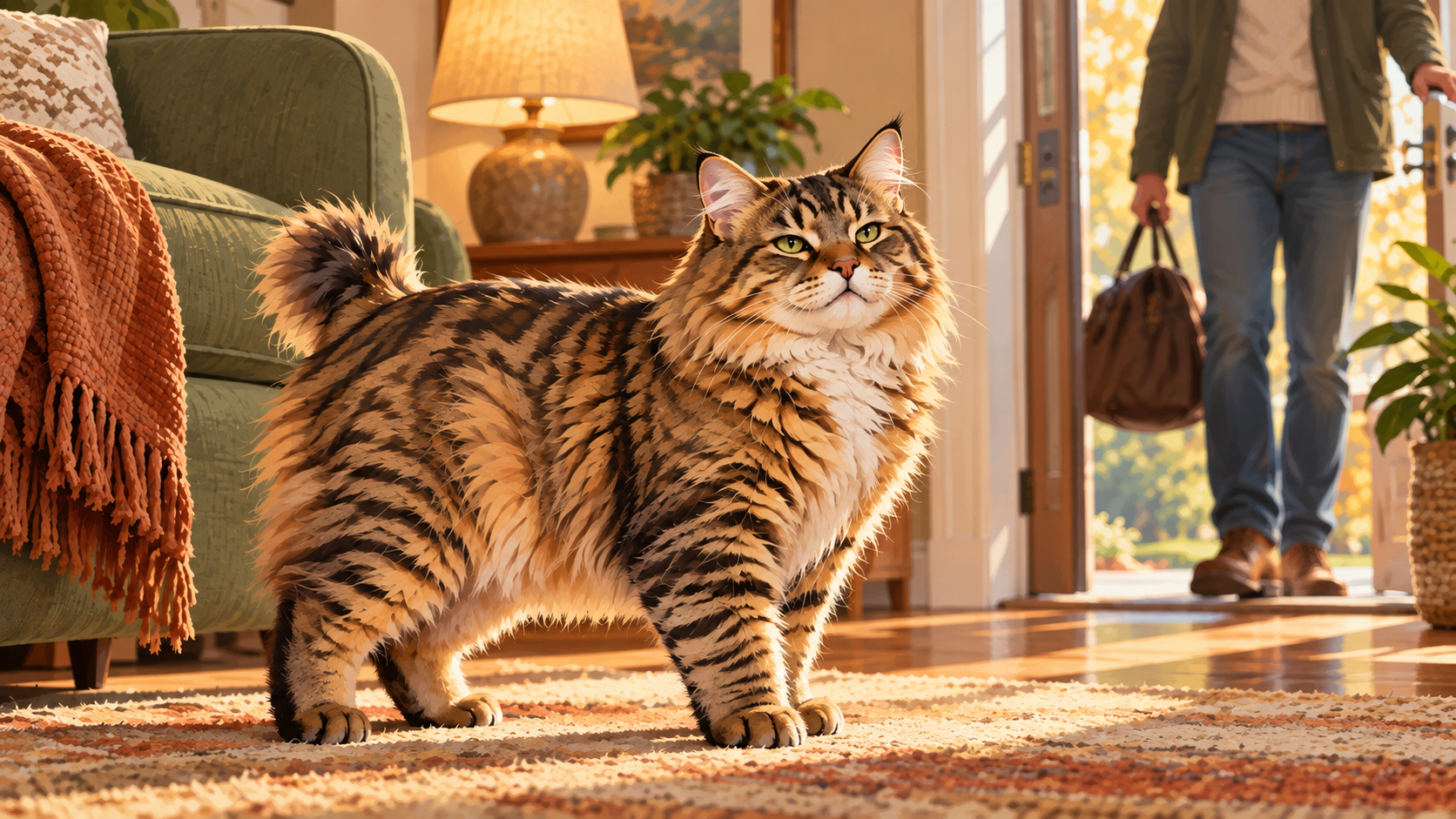
Stranger tolerance is scored at 4, placing it among the stronger social tendencies in the profile while still sitting below the top family-friendliness score of 5. That distinction matters because it gives the social portrait some texture. The American Bobtail is not represented as socially strong only with familiar household members; the dataset also gives a positive score for tolerance of unfamiliar people.
The source does not describe how quickly a cat might warm up, how it behaves during visits, or what individual experiences might shape those responses. Those details would be inventions. The only supported factual statement is that stranger tolerance is rated 4 in the canonical dataset.
Placed beside adaptability 5 and sociality 4, that score contributes to a picture of flexibility and social ease. It also complements the human friendliness score of 4. The overall pattern is consistent rather than contradictory.
Cats Judging Humans translates the score into a simple office policy: visitors may be admitted without immediately triggering a security incident. This is humorous editorial language, not a guarantee about any individual American Bobtail.
The tendency disclaimer is especially relevant here because socialization and environment are explicitly listed among the factors that can shape individual behavior. A breed-level stranger-tolerance score should never be treated as a prediction about a particular cat meeting a particular person.
Still, within the profile, the score is useful. It tells us that the American Bobtail’s social tendencies are not narrowly confined to one category. Family friendliness is strongest, but broader human tolerance remains positive.
The CJH department therefore classifies the breed as socially competent with a reasonable visitor policy. Approval is not automatic, of course. No serious feline institution would go that far. But the waiting room appears less hostile than expected.
Independence and Attention Need Meet in the Middle
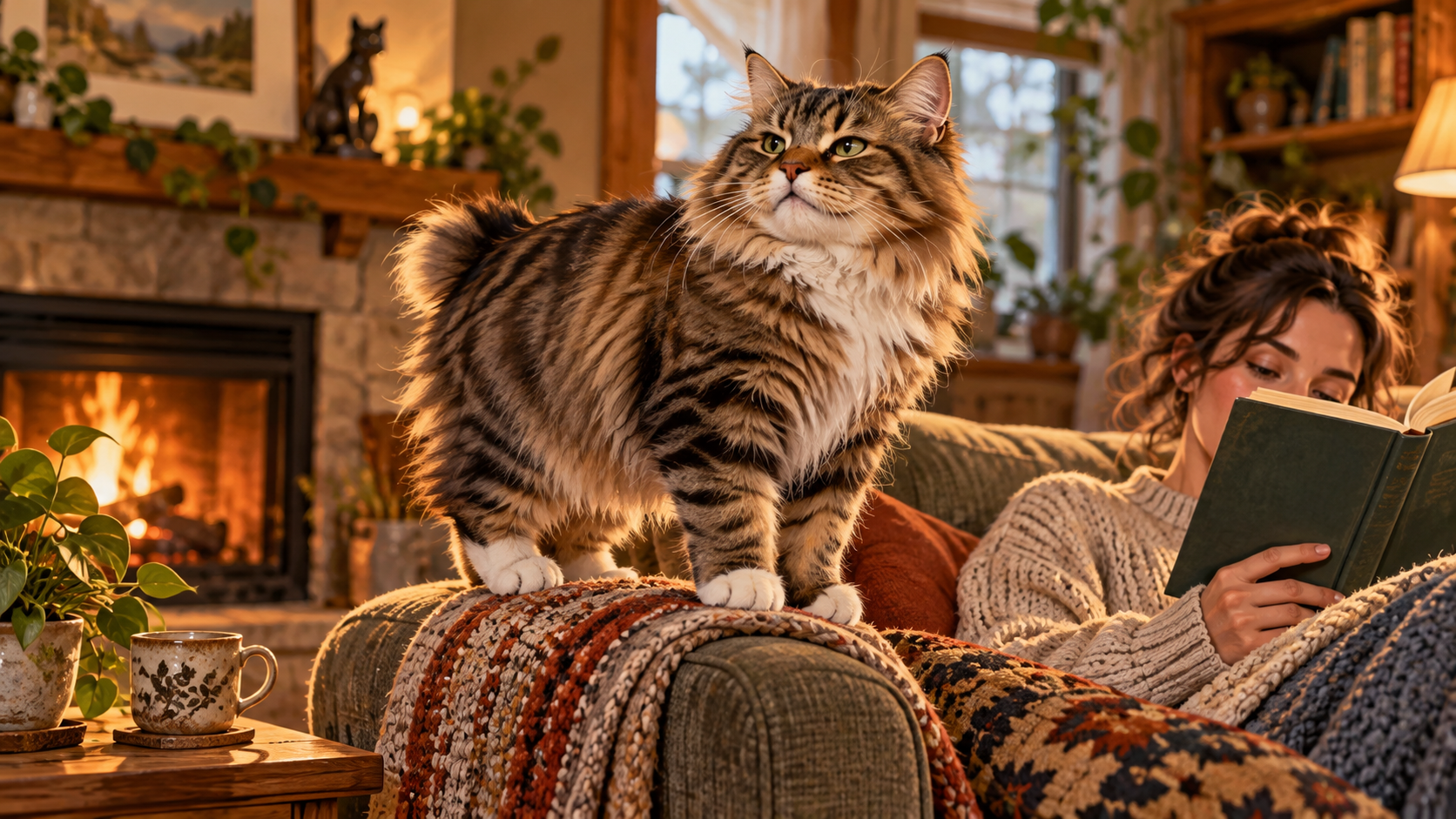
The independence score is 3, and the attention need score is also 3. That matching midpoint is one of the clearest signs of balance in the profile. The source does not frame the American Bobtail as strongly dependent on constant human involvement, but it also does not frame the breed as highly detached.
The human relationship summary fits that middle ground neatly. The breed is described as often affectionate and family-oriented, typically enjoying interaction without needing constant attention. In other words, connection matters, but the profile leaves room for self-direction.
This is useful because discussions of cat temperament often force social behavior into false opposites. A cat is labeled either independent or affectionate, either social or self-contained. The American Bobtail data resists that simplification. Affection is 4, sociality is 4, and family friendliness is 5, while independence remains a moderate 3.
Cats Judging Humans translates that combination into a practical hierarchy: the human is valued, but the cat is not necessarily filing hourly attendance reports. The relationship can remain warm without requiring constant confirmation.
That editorial interpretation stays close to the source because it does not invent a behavior. It simply highlights the coexistence of strong social scores and moderate independence.
The tendency disclaimer still governs the individual. Some American Bobtails may seek more attention, others less. Age, health, genetics, socialization, environment, and experience can all change how these broad tendencies appear.
At breed-profile level, though, the middle scores are informative. They help explain why the official CJH verdict feels generous: the cat can be involved and affectionate without treating every second of human autonomy as a breach of protocol.
Human Friendliness and Sociality Form a Consistent Pattern
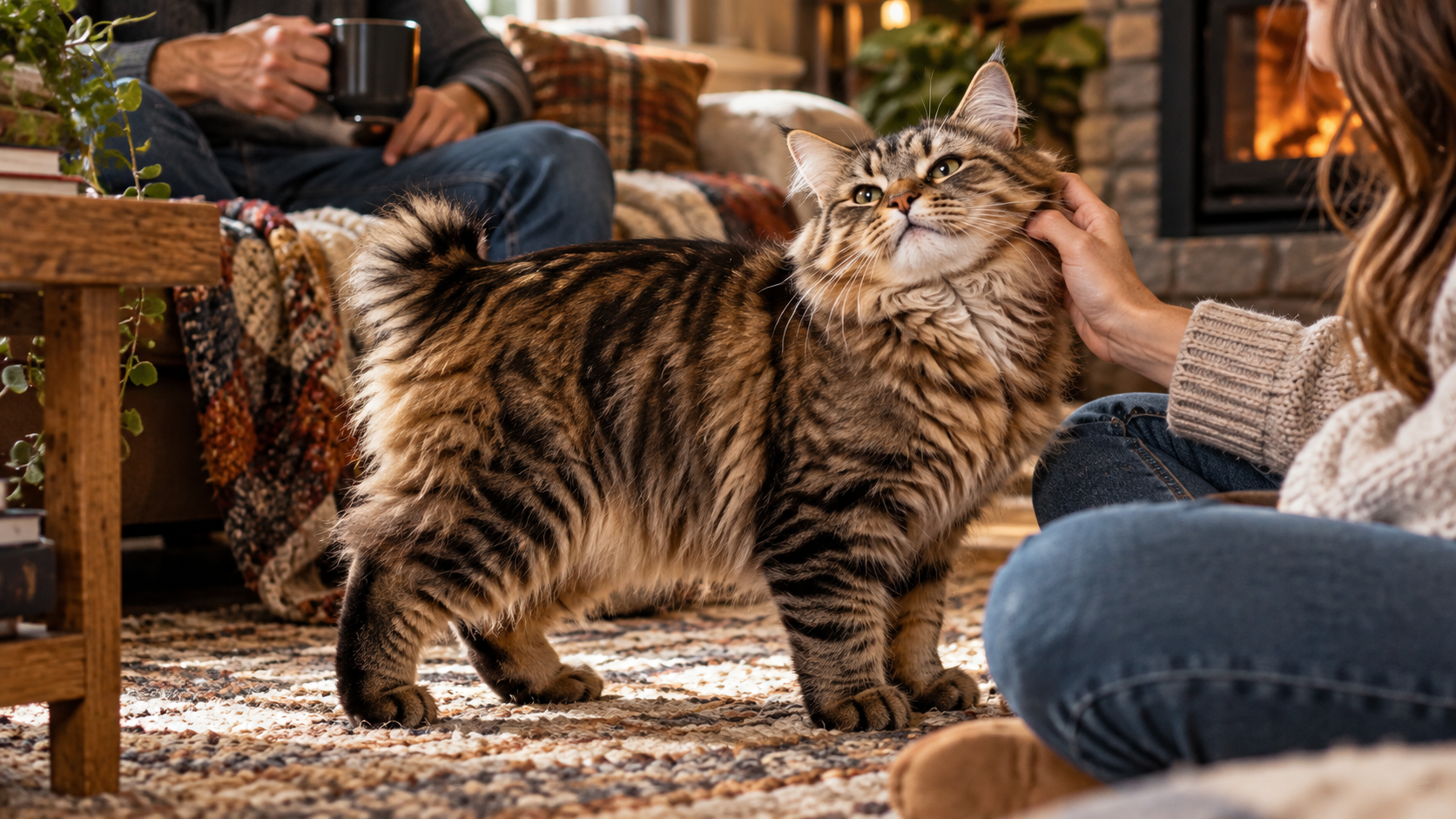
Human friendliness and sociality are both scored at 4, and those numbers are supported by the relationship summary’s emphasis on affection and family orientation. The consistency across fields matters because it reduces the risk of overinterpreting one isolated score.
The American Bobtail profile repeatedly points toward a socially positive relationship with people. Family friendliness is 5. Human friendliness is 4. Sociality is 4. Affection is 4. Stranger tolerance is 4. Those categories are not identical, but together they create a coherent social picture.
The source does not authorize stronger claims than that. It does not say that every individual will be equally friendly with every person or in every environment. The tendency disclaimer explicitly warns against treating breed-level fields as guarantees.
Cats Judging Humans nevertheless appreciates the statistical generosity. A profile this socially positive suggests that humans are not merely tolerated as necessary support staff. They may actually be liked, which is frankly more recognition than the average department receives.
The low-to-moderate judgment score in the CJH profile makes that interpretation even more amusing. The cat may observe human errors, but the editorial framework suggests the breed is not predisposed to turn every mistake into a disciplinary hearing.
This does not mean the American Bobtail lacks standards. The supervision tendency score is 4, after all. The cat is still paying attention. The difference is that attention and condemnation are not the same thing.
That distinction gives the profile its charm. The breed can be socially engaged, observant, and affectionate while still granting humans some room to be imperfect. In the Cats Judging Humans universe, that qualifies as unusually progressive governance.
Low Vocality and Low Complaint Frequency Are Separate Signals
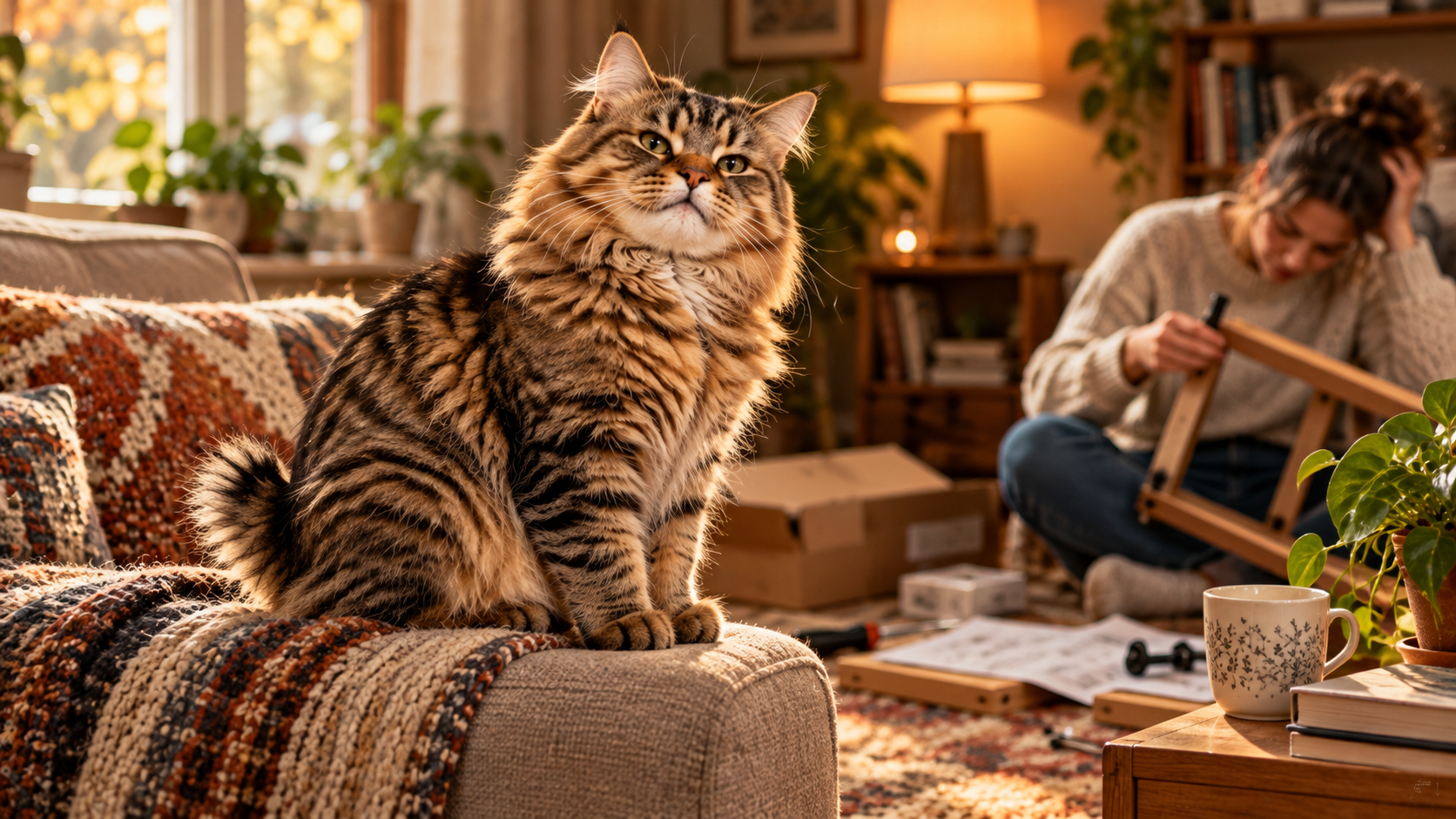
Vocality is scored at 2 in the canonical breed data, while complaint frequency is scored at 2 in the Cats Judging Humans profile. Those numbers happen to match, but they should not be treated as the same metric. Vocality is a breed tendency field. Complaint frequency is a humorous editorial interpretation.
The distinction matters because the article should not imply that lower vocality automatically means fewer complaints in a scientific or behavioral sense. The CJH complaint score is explicitly non-scientific. It belongs to the brand’s joke framework, not the canonical temperament dataset.
Factually, the source gives vocality a relatively low score of 2. It does not provide detailed information about sound type, frequency, timing, or communication style, so the article should not invent those specifics.
Editorially, the matching complaint score creates an irresistible joke: perhaps the American Bobtail simply does not consider every human error worth documenting. Again, that is commentary, not a literal breed claim.
This is a good example of how the article can stay entertaining without confusing categories. The breed data and the CJH profile can be discussed side by side as long as their status remains clear. One is a supplied tendency field; the other is a branded interpretation of broad tendencies.
The official verdict fits the same tone. The breed generally approves of humans and is willing to overlook a surprising amount of household nonsense. That editorial line is consistent with low complaint frequency without pretending to derive a scientific conclusion from it.
For the human reader, the practical takeaway is modest: vocality is not a high-scoring tendency in this dataset, and the CJH framework portrays the breed as relatively forgiving. Silence, however, should never be mistaken for lack of awareness. The supervision score remains 4.
Grooming Scores Low, but the Source Does Not Support a Care Manual
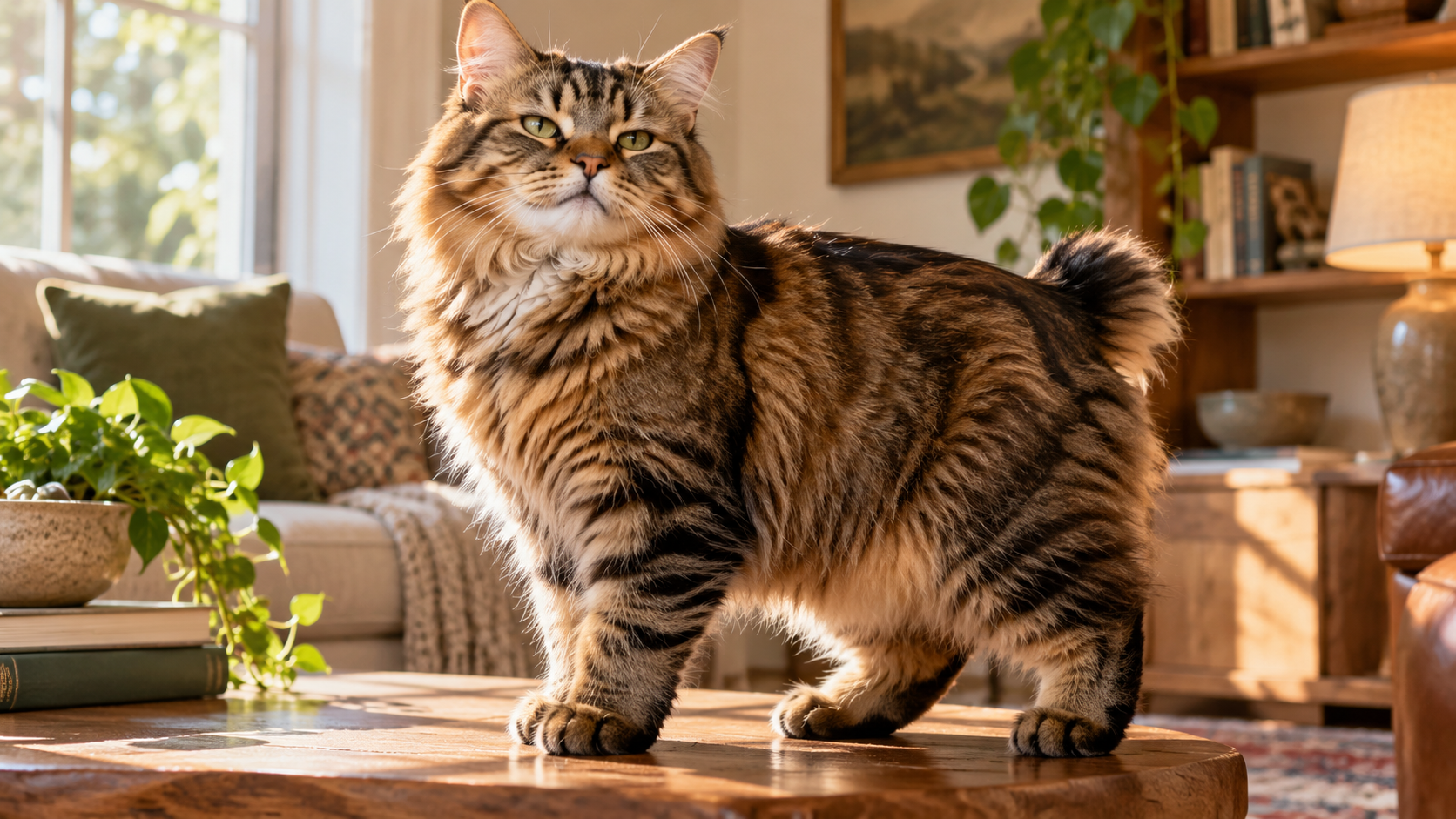
The grooming score is 2, which places it on the lower side of the dataset’s scale. The appearance identity also describes a shaggy, wild-looking coat. Those two facts are interesting together, but they do not authorize a detailed grooming guide.
The source does not specify brushing frequency, shedding, bathing, coat maintenance routines, or grooming tools. Because the user explicitly prohibited outside research and unsupported claims, this article should not fill those gaps with general breed knowledge.
The responsible factual statement is therefore limited: the coat is described as shaggy and wild-looking, and grooming is scored at 2. Anything more would require evidence that is not in the canonical data.
Cats Judging Humans can still find humor in the contrast. The cat looks rugged enough to have returned from a wilderness expedition, while the grooming score quietly suggests the administrative burden is not being ranked especially high. That is editorial observation, not a care recommendation.
This restraint is important because long-form articles can create pressure to expand every field into a full section of advice. That would be the wrong goal here. The article is a breed judgment profile grounded in supplied data, not a medical, grooming, or husbandry manual.
Sometimes saying less factually is a sign of better source discipline. The source gives enough information to describe visual identity and relative grooming tendency, but not enough to prescribe care.
The CJH department therefore files grooming under “low-scoring maintenance category, details not submitted.” The cat, naturally, declines further comment and would like the record to reflect that the coat looks excellent anyway.
The Shortened Expressive Tail Is a Visual Identity, Not a Personality Shortcut
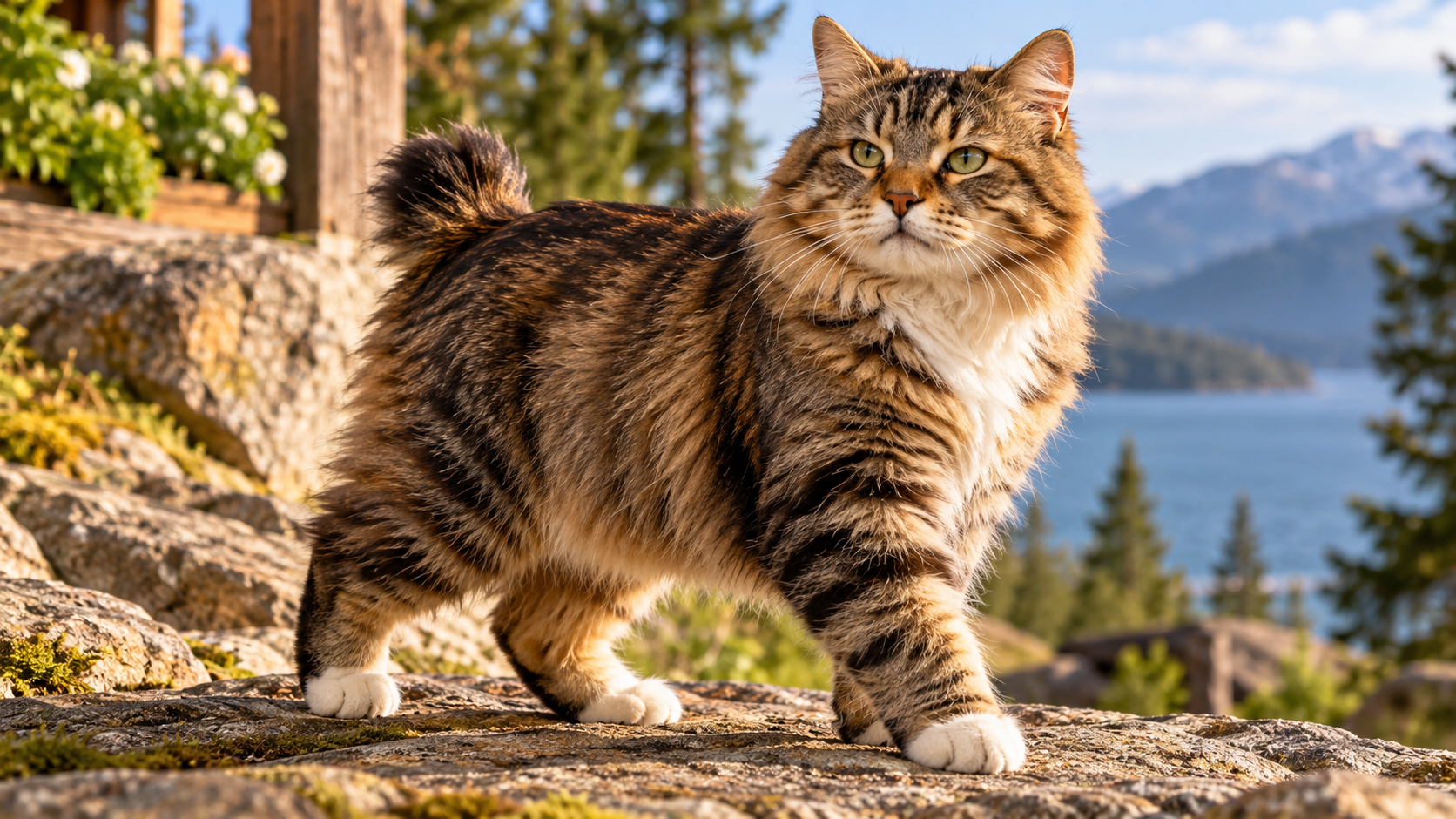
The naturally shortened expressive tail is one of the clearest visual identifiers in the American Bobtail appearance description. It helps distinguish the breed profile immediately and contributes to the sturdy, wild-looking silhouette described in the source.
The important editorial discipline is not to turn that physical trait into unsupported behavioral symbolism. The source does not say that tail length causes confidence, playfulness, affection, adaptability, or any other temperament tendency. The appearance identity and temperament summary should remain separate categories even when they contribute to one overall portrait.
The word “expressive” is part of the supplied appearance field, so it is fair to acknowledge that the tail is visually characterized that way. But the article should not invent specific tail signals, communication meanings, or body-language interpretations that are not in the source.
Cats Judging Humans can still enjoy the visual irony. A shorter tail does not reduce the apparent authority of the profile. If anything, the breed description still manages to sound substantial: sturdy build, broad head, shaggy coat, confident temperament, strong adaptability.
The larger point is that breed identity is often built from a combination of physical and social information. The American Bobtail profile has a distinctive appearance and a balanced temperament pattern, but those elements do not need to be causally linked to be meaningful.
For future website imagery, the shortened tail is especially important because it helps keep visual representations aligned with the canonical appearance identity. For editorial writing, though, it should stay in its proper lane: a defining physical feature, not a personality diagnosis.
The CJH verdict remains focused where the source is strongest—human tolerance, sociality, adaptability, playfulness, confidence, and easygoing temperament. The tail may be expressive, but the paperwork is already complete.
The Human Compatibility Report Is Remarkably Generous
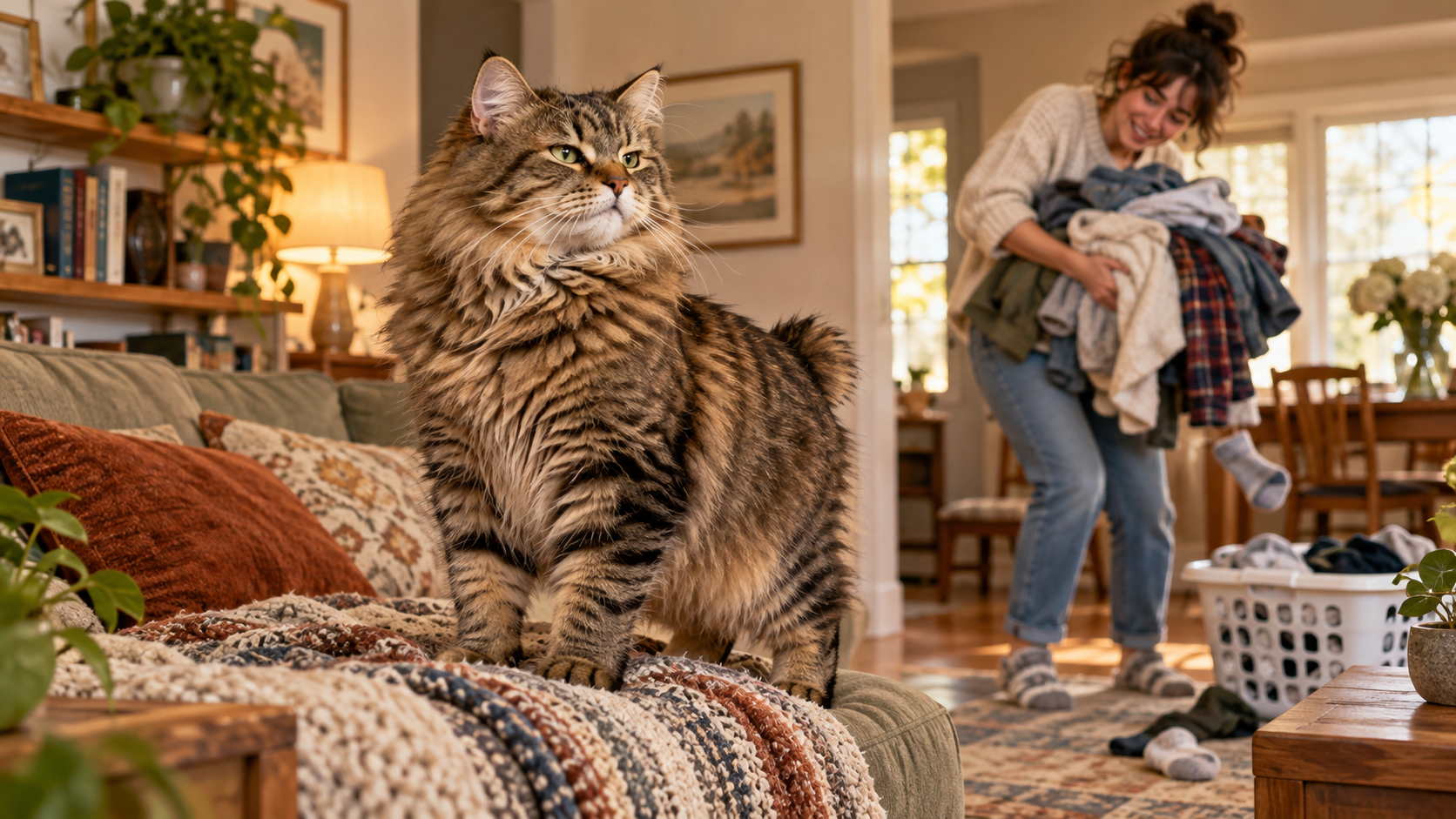
The Cats Judging Humans profile gives the American Bobtail one of the more forgiving editorial combinations: judgment score 2, labeled Low to Moderate; human nonsense tolerance 4, labeled Strong; complaint frequency 2; supervision tendency 4. The editorial note attached to these metrics is explicit that they are humorous interpretations of broad breed tendencies, not scientific measurements.
That disclaimer is what allows the profile to be funny without becoming misleading. The judgment score is not a real temperament scale. The nonsense-tolerance label is not a validated behavioral metric. They are brand devices designed to translate the canonical data into the Cats Judging Humans point of view.
The official verdict brings the whole framework together: the breed generally approves of humans and is willing to overlook a surprising amount of household nonsense. That line fits the factual profile because the breed is described as easygoing, adaptable, affectionate, family-oriented, socially positive, and not constantly attention-seeking.
The supervision score of 4 keeps the verdict from becoming too soft. The cat may be tolerant, but it is still involved enough to notice what is happening. That is editorially useful because it preserves the brand’s judgmental voice while acknowledging that the profile itself is relatively generous.
In other words, the American Bobtail does not need to be recast as a harsh evaluator to fit Cats Judging Humans. The comedy comes from the opposite direction. This is the reviewer who has seen the human file, noticed several questionable decisions, and decided that corrective action is not yet necessary.
For humanity, that may be the best possible outcome. Approval remains conditional, of course. No feline institution would surrender leverage entirely. But the report is unusually positive.
Why This Profile Feels Unusually Forgiving in CJH Terms
Cats Judging Humans usually finds comedy in the gap between feline standards and human performance. The American Bobtail profile is interesting because the supplied data leaves less need for exaggerated condemnation. The breed is described as generally easygoing, highly adaptable, strongly family-friendly, socially positive, affectionate, playful, and relatively tolerant of strangers. The CJH profile then adds Low-to-Moderate judgment, Strong human nonsense tolerance, and low complaint frequency.
That does not make the cat indifferent. Supervision tendency is still 4, which gives the editorial character plenty of awareness. The cat is watching. The difference is that observation does not automatically become prosecution.
This creates a different kind of humor from the brand’s harsher mock-performance-review concepts. Instead of a feline authority searching for reasons to reject the human, the American Bobtail reads more like the senior reviewer who has seen enough household chaos to know which incidents are worth escalating.
That interpretation is transparent editorial comedy. The factual foundation is the breed’s supplied temperament summary, relationship summary, scores, and the official CJH verdict. Nothing here claims that an individual American Bobtail will literally ignore mistakes or make conscious decisions about household discipline.
The profile simply supports a softer judgment style than the brand might use elsewhere. That variation is useful because it keeps breed articles from becoming copies of one another. Not every cat needs to be portrayed as maximally critical for the Cats Judging Humans idea to work.
In this case, the joke is generosity itself. Humanity has somehow received a relatively favorable review from a feline authority. The correct response is not to celebrate too loudly. It is to avoid giving management a reason to reopen the file.
What the American Bobtail Profile Asks of the Human Reader
The most responsible use of a breed profile is to help readers understand broad tendencies while leaving room for the individual cat. For the American Bobtail, the source repeatedly emphasizes social comfort, adaptability, affection, playfulness, confidence, and family orientation. It also shows moderate attention need and independence, plus relatively low vocality and grooming scores.
That combination may appeal to readers who value a cat profile that is engaged without being defined by constant attention. But the article should not turn that into a recommendation or promise. The source does not support claims about which household is “best,” and individual cats can differ significantly from breed tendencies.
The tendency disclaimer is therefore not boilerplate. Genetics, socialization, age, health, environment, and experience all matter. Any real cat should be understood as an individual first.
Cats Judging Humans adds only the editorial layer: this is a profile in which humanity appears to have a decent chance of retaining approval. The breed’s Strong human nonsense tolerance and Low-to-Moderate judgment score create a playful picture of a cat that notices mistakes but often lets them pass.
The supervision tendency of 4 prevents humans from becoming overconfident. The cat may not require constant attention, but the profile still supports an involved, socially aware companion. Freedom from continuous demand is not the same thing as freedom from observation.
The practical editorial takeaway is therefore balanced. Expect the breed profile to read as social, affectionate, adaptable, playful, and easygoing, while remembering that those are broad tendencies rather than guarantees.
The human role, in CJH terms, is simple: continue behaving reasonably, remain worth interacting with, and do not mistake tolerance for lack of standards.
The American Bobtail profile is notable for how consistently it combines social strength with moderation. The canonical data describes a sturdy, medium-to-large cat with a broad head, shaggy wild-looking coat, and naturally shortened expressive tail, then pairs that appearance with confidence, adaptability, intelligence, playfulness, and a generally easygoing temperament. Family friendliness and adaptability are especially strong, while affection, human friendliness, sociality, stranger tolerance, activity, and playfulness all remain high.
The relationship summary adds the key nuance: the breed is often affectionate and family-oriented, typically enjoying interaction without needing constant attention. That single sentence explains much of the balance visible in the scores. The cat can be engaged without being relentless, social without losing independence, and playful without turning the household into a permanent emergency.
Cats Judging Humans converts that balance into an unusually favorable verdict. Low-to-Moderate judgment, Strong human nonsense tolerance, low complaint frequency, and solid supervision create the image of a feline authority that sees human flaws and often chooses mercy. That is playful editorial interpretation, not a scientific diagnosis.
The most useful reading is therefore not that every American Bobtail will be easygoing in exactly the same way. The source explicitly rejects that kind of certainty by noting the influence of genetics, socialization, age, health, environment, and experience. The value of the breed profile is in the pattern: strong adaptability, strong family friendliness, good sociality, good affection, good playfulness, and moderate needs for attention and independence. That pattern gives readers a structured way to understand the canonical data while leaving room for the real cat to differ.
As always, the individual cat remains more important than the breed stereotype. But within the supplied profile, the American Bobtail gives humanity something rare: conditional approval with surprisingly generous terms. The household remains under observation, standards still exist, and management retains the right to revise its opinion. For now, though, the human file can remain open without corrective action.
That relative leniency is still not permission for complacency. The profile remains active, playful, socially aware, and supervised. Humanity has earned a favorable review, not permanent immunity from future feline evaluation.