
The Abyssinian enters the Cats Judging Humans files with a profile that is difficult to mistake for passive household ornamentation. The canonical breed data describes a slender, athletic cat with a warm ticked short coat, large ears, almond-shaped eyes, and an alert expression. Its temperament summary is equally direct: highly active, curious, intelligent, people-oriented, and often interested in whatever is happening. That combination matters because it frames the breed less as a decorative presence and more as an ongoing participant in domestic life. The human relationship summary adds an important qualifier: Abyssinians usually form strong bonds with people, but they often prefer interactive companionship over prolonged lap time. In other words, affection may arrive with an agenda.
The numerical profile reinforces that picture. Activity and playfulness are both scored at 5, while adaptability, affection, attention need, family friendliness, human friendliness, and sociality sit at 4. Independence, stranger tolerance, and vocality are all scored at 3. Grooming is scored at 1. These are broad dataset tendencies, not promises about any individual cat, and the source explicitly warns that genetics, socialization, age, health, environment, and experience all matter. Cats Judging Humans takes that factual framework and adds an editorial layer: this is a breed profile that suggests supervision, curiosity, and human participation are likely to be more relevant than serene invisibility. The official CJH verdict captures the tone neatly: Abyssinians like humans best when those humans are interesting, available, and capable of keeping up. That is not a scientific diagnosis. It is a playful interpretation of the supplied tendencies—and, for the humans involved, a fairly demanding job description.
The Abyssinian at a Glance: Alert, Athletic, and Already Involved
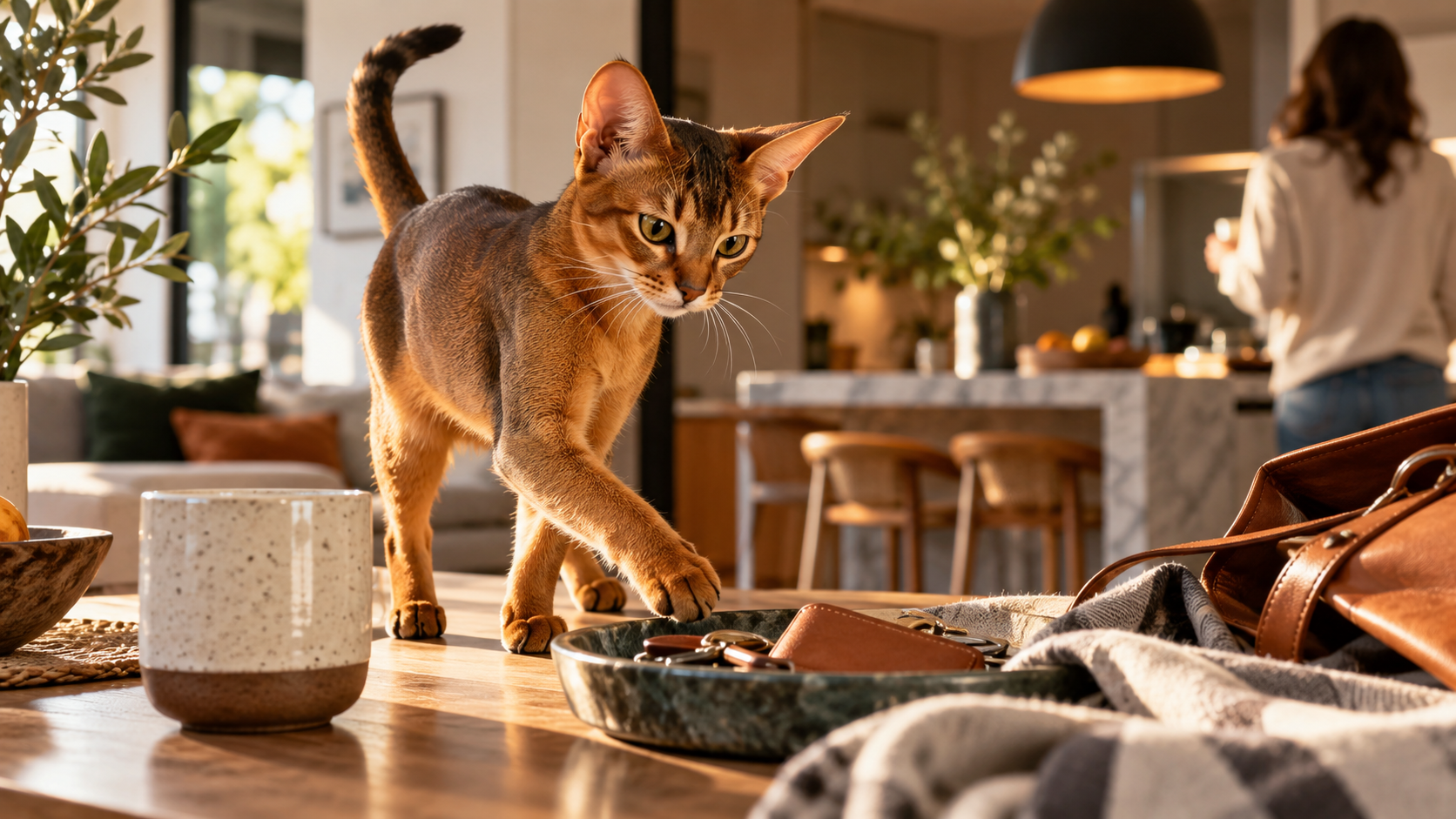
The most useful place to begin is with the overall shape of the profile rather than any single score. The supplied appearance identity describes the Abyssinian as a slender, athletic cat with a warm ticked short coat, large ears, almond-shaped eyes, and an alert expression. That visual description pairs naturally with the temperament summary, which emphasizes high activity, curiosity, intelligence, and a people-oriented disposition. Nothing in the source suggests a cat whose defining quality is to fade quietly into the background. The pattern is one of alertness and engagement.
That does not mean every Abyssinian will behave the same way, and the source specifically cautions against treating breed tendencies as guarantees. Individual cats differ because of genetics, socialization, age, health, environment, and experience. Still, a breed article has to work with the tendencies actually supplied, and those tendencies point in a consistent direction: movement, observation, play, social connection, and interest in ongoing activity.
The Cats Judging Humans translation of that profile is simple: your household may be considered a live operation rather than a quiet residence. From the feline point of view, a closed laptop, an unattended bag, a newly opened drawer, or a human walking briskly toward another room may all register as developments requiring oversight. That sentence is editorial comedy, not a factual claim about specific Abyssinian behavior. It is a way of expressing what “highly active,” “curious,” and “often wants to be involved in whatever is happening” feel like when translated into the brand’s judgmental voice.
The high activity and playfulness scores also help explain why the breed profile reads as energetic rather than merely friendly. Human friendliness is strong at 4, but the article should not reduce the Abyssinian to a generic affectionate cat. The more distinctive combination is friendliness plus intensity: social connection alongside a strong apparent desire to participate. That is where the personality of the profile lives. The human is not simply liked. The human may also be expected to provide an acceptable level of interest.
High Activity Means the Household Is Not a Museum
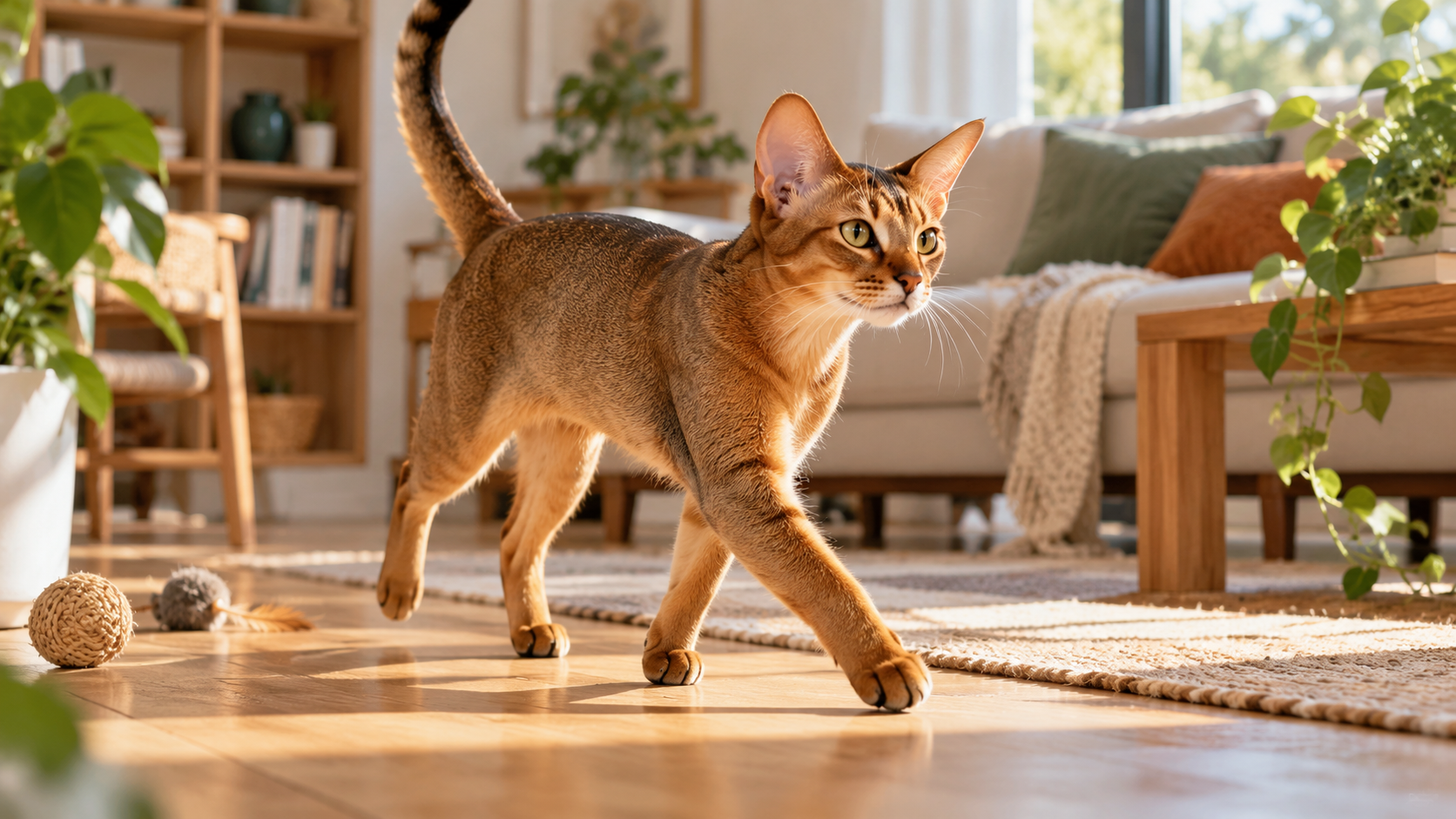
Activity is one of the clearest signals in the canonical data: the Abyssinian receives an activity score of 5. The temperament summary independently supports that high score by describing the breed as highly active. Those two pieces of information are enough to justify a strong editorial conclusion without inventing details: this profile is built around motion and engagement, not passivity.
It is tempting, when writing about an active cat, to fill the page with specific behavioral claims that are not present in the source. That would be exactly the wrong approach here. The source does not authorize claims about particular climbing habits, preferred furniture, athletic feats, or daily exercise routines. What it does support is the broader idea that activity is central to the breed tendency profile. So the useful question becomes not “What exact stunt will this cat perform?” but “What does a very high activity tendency mean for the human relationship described elsewhere in the dataset?”
The answer is participation. The same profile says the Abyssinian is people-oriented, curious, intelligent, and often wants to be involved in whatever is happening. High activity therefore sits inside a larger social picture. The cat is not simply energetic in isolation; the profile suggests that human activity itself may be interesting. Cats Judging Humans interprets that as a kind of operational oversight: if you stand up, something has changed; if something has changed, an inquiry may be opened.
Again, that is playful editorial framing, not a behavioral guarantee. But it is grounded in the source’s combination of high activity and involvement. For readers trying to understand the breed profile, this matters more than a list of invented scenarios. The Abyssinian data suggests a cat whose energy is likely to be a visible part of household life rather than an occasional feature.
Humans who prefer a very low-participation relationship should at least notice that this is not how the supplied profile is written. The Abyssinian scorecard does not present stillness as the defining trait. It presents alert, active engagement. In CJH terms, the building remains open, the department is staffed, and apparently someone has decided the human schedule is public information.
Curiosity and Intelligence Turn Ordinary Life Into Ongoing Review

The source uses two important words together: curious and intelligent. Neither word comes with a detailed list of specific behaviors, so the article should resist the urge to manufacture one. Still, those terms matter because they describe how the Abyssinian profile relates to novelty and attention. Curiosity suggests interest in what is changing. Intelligence suggests that the breed is not being characterized as merely reactive or energetic. Combined with high activity and people orientation, the result is a profile centered on active engagement with the surrounding environment and the humans inside it.
This is where the Cats Judging Humans voice can do useful work without pretending to add science. A curious, intelligent, people-oriented cat can be described editorially as the household reviewer who was never invited to the meeting but has somehow obtained the agenda. The joke is not that the breed literally performs audits. The joke is that the supplied tendencies support a strong sense of participation and observation.
The distinction between fact and interpretation matters. Factually, the source says highly active, curious, intelligent, people-oriented, and often wants to be involved in whatever is happening. Editorially, that sounds like a cat who regards human activity as a shared project. The human may imagine that they are completing a routine task; the feline interpretation is that an event has occurred and should be reviewed for relevance.
This also explains why the Abyssinian profile feels more dynamic than a simple friendliness score could capture. A human-friendly cat can be socially pleasant without being intensely interested in activity. Here, friendliness exists alongside curiosity, activity, and attention need. The blend is what creates the sense of an involved companion rather than a distant observer.
Readers should still keep the source disclaimer in view. An individual Abyssinian may be more or less curious, active, social, vocal, affectionate, independent, or tolerant than the dataset suggests. Breed-level information is useful as a tendency map, not as a personality contract. The appropriate CJH conclusion is therefore conditional: the profile suggests that humans may receive more scrutiny than privacy, but the individual cat retains full authority to disregard the paperwork.
People-Oriented Does Not Mean Permanently Attached to a Lap
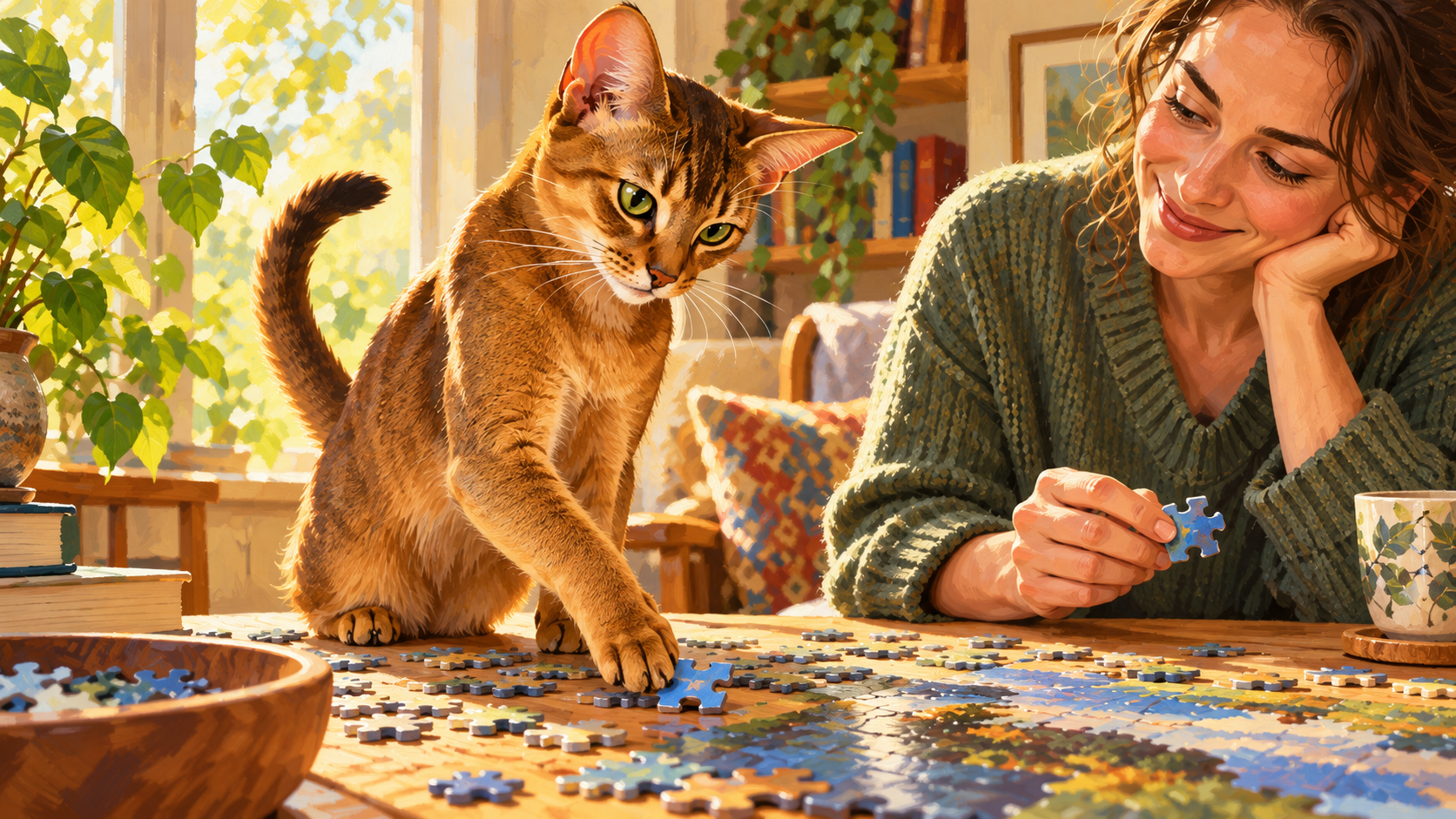
The human relationship summary is one of the most useful lines in the source because it adds precision to the affection story. It says that Abyssinians usually form strong bonds with people but often prefer interactive companionship over prolonged lap time. That sentence prevents a common mistake: treating affection as though it has only one visible form. In this profile, closeness is framed as relational and participatory rather than automatically sedentary.
The affection score of 4 supports the idea of meaningful social connection, while the human friendliness score of 4 and sociality score of 4 reinforce that the breed tendency is broadly people-oriented. But the relationship summary tells us how to read those scores more carefully. A high-affection tendency does not require the article to promise hours of still physical contact. The supplied data instead emphasizes interaction.
Cats Judging Humans translates that nuance into a familiar bureaucratic principle: presence may be required even when lap occupancy is not. The human may have assumed that affection means being pinned beneath a sleeping cat. The Abyssinian profile proposes another model—one in which the relationship can revolve around shared activity, attention, and involvement. That playful reading stays within the source because it does not invent a new temperament trait; it highlights the distinction the source already makes.
This is also a good reminder that broad breed descriptions should not be compressed into simplistic labels such as “cuddly” or “not cuddly.” The canonical data is more specific than that. It describes strong bonds and interactive companionship, while cautioning that individuals vary. A useful article preserves that complexity instead of forcing the breed into a binary category.
For the human reader, the implication is less about predicting exactly where a cat will sit and more about understanding the likely style of connection described by the profile. The relationship may be affectionate, but the cat may also be interested in what the human is doing. In CJH terms, emotional closeness and operational oversight are not competing departments. They have apparently been merged for efficiency.
Playfulness Is a Core Part of the Profile, Not a Decorative Extra
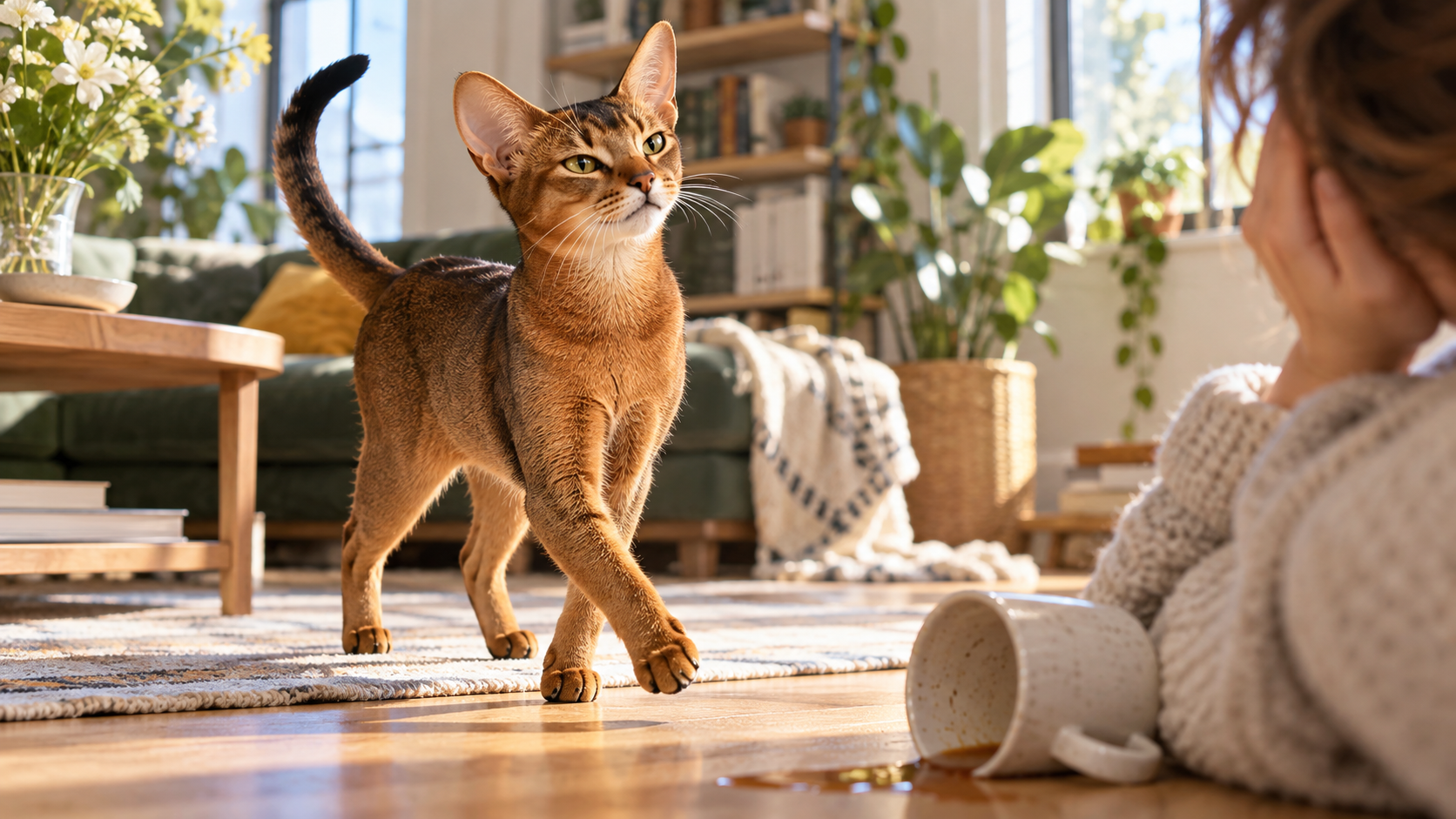
The playfulness score is 5, matching the activity score at the top of the scale used in the dataset. That gives play an important place in the Abyssinian profile. It should not be treated as a minor accessory to friendliness or affection. Alongside curiosity and intelligence, strong playfulness helps define the breed’s overall tendency toward engagement.
The source does not specify particular games, objects, routines, or play styles, so this article should not invent them. What can be said is that a top playfulness score suggests that play is a prominent part of the breed tendency profile. Combined with the statement that Abyssinians often want to be involved in whatever is happening, it supports an editorial picture of a cat that expects life to remain interesting.
Cats Judging Humans would phrase the human responsibility this way: if the environment becomes dull, management may receive a strongly worded internal memo. That line is humor, not a factual behavioral prediction. It simply turns “playfulness 5” into the brand’s preferred administrative language. The important underlying point is that an Abyssinian profile should be read as active and participatory rather than placid and detached.
Playfulness also interacts with the human relationship summary in a useful way. The source says the breed often prefers interactive companionship over prolonged lap time. A high playfulness score gives that phrase more context. Interaction is not an abstract social quality here; it sits next to a very high tendency toward play and activity. That combination may help readers understand why the profile emphasizes doing things together rather than simply being physically near each other.
The disclaimer remains essential. Not every Abyssinian will express playfulness with the same frequency or intensity, and age, health, environment, and experience can all matter. The dataset is describing broad tendencies, not issuing a daily quota. But as a breed-level portrait, the signal is clear: play is central enough to deserve its own section. The human who hoped to qualify as furniture alone may need to update the application.
Supervision Tendency: The CJH Department With No Off Switch
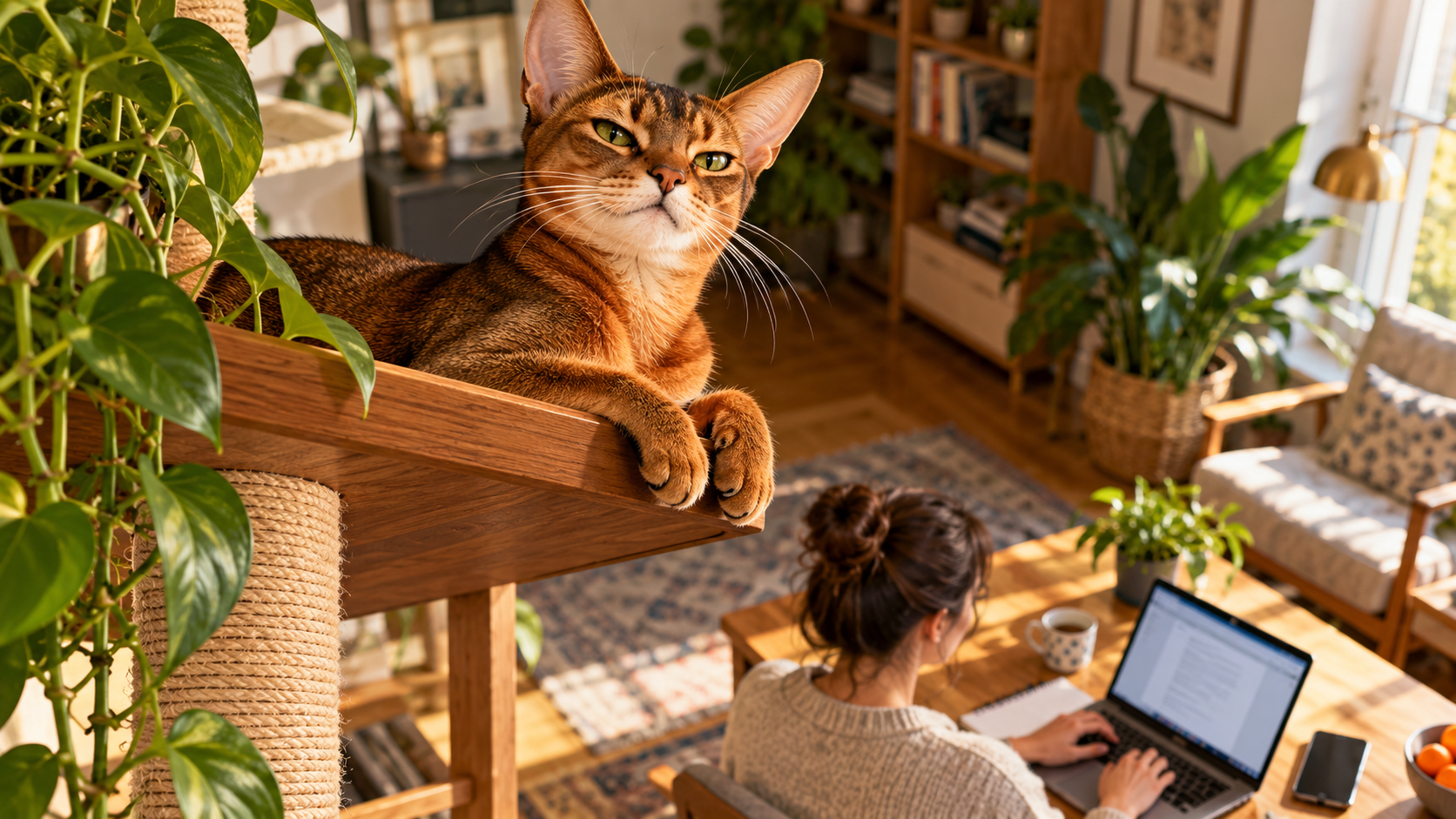
The Cats Judging Humans profile gives the Abyssinian a supervision tendency score of 5. Unlike the breed temperament fields, this is explicitly identified as a humorous editorial interpretation rather than a scientific measurement. That distinction should remain visible. The score does not establish a clinical or behavioral fact. It is the brand’s playful way of interpreting the canonical description of a highly active, curious, intelligent, people-oriented cat that often wants to be involved in whatever is happening.
As satire, the supervision score is almost inevitable. When a profile combines strong sociality, high activity, high playfulness, and a stated tendency toward involvement, the CJH version imagines a cat that has appointed itself chair of the household oversight committee. No vote was held. No minutes are available. The appointment nevertheless appears permanent.
This editorial device is useful because it turns a cluster of abstract scores into a recognizable human experience. “Supervision” suggests attention directed toward other people’s activity. That is exactly what the source’s involvement language invites us to joke about, without claiming a specific behavior for every cat. The humor makes the profile memorable while the article remains transparent about what is factual and what is interpretive.
The supervision score also helps distinguish this breed article from a generic summary. The goal is not to repeat “active and social” in thirteen different ways. Instead, each section examines how different pieces of the supplied data interact. Here, the focus is on the social direction of that energy. Activity can be solitary. Playfulness can be self-directed. But the human relationship summary and people-oriented temperament description place human participation near the center of the profile.
So the judgment is not “Abyssinians always monitor their humans.” The source does not support that universal claim. The editorial judgment is narrower and more honest: if a breed profile says the cat is highly active, curious, people-oriented, and often wants to be involved, Cats Judging Humans is absolutely going to classify that as supervision. The human may call it companionship. The cat, naturally, has chosen a title with more authority.
Attention Need Is High Enough to Matter
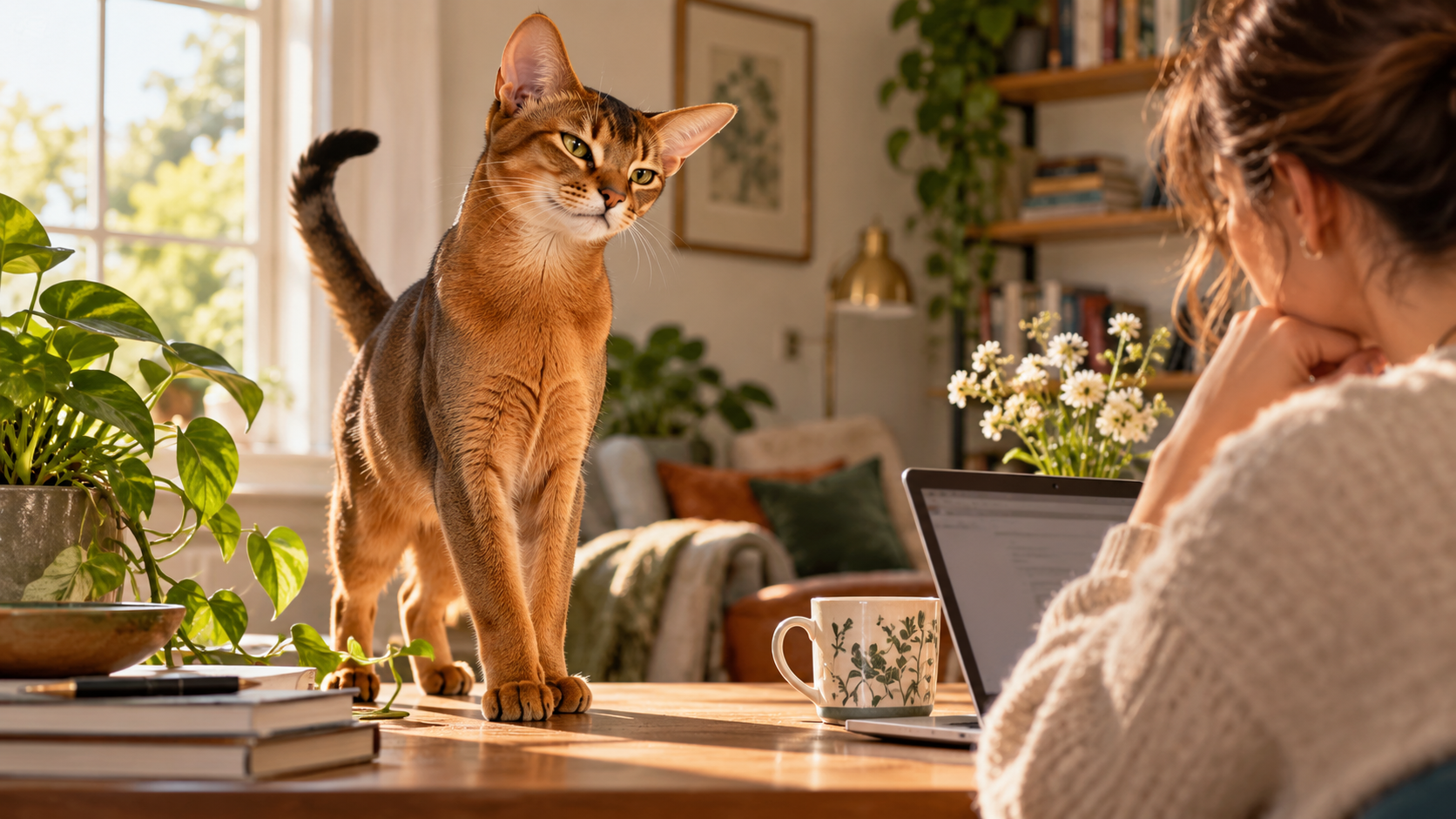
The attention need score is 4, which places it among the stronger tendencies in the supplied dataset. That score is consistent with the human relationship summary and temperament description, both of which emphasize bonds with people and involvement in ongoing activity. Taken together, those data points suggest that attention is not incidental to the profile.
It is important not to overtranslate the number. A score of 4 does not tell us an exact number of minutes, preferred interaction schedule, or universal response to being alone. The source does not provide those details, so the article should not pretend otherwise. What the score does allow us to say is that attention need is relatively prominent within this breed profile.
In Cats Judging Humans language, that creates a familiar management problem: the human may have assumed that “available” was a vague emotional quality, while the cat appears to have interpreted it as a service-level agreement. This is, again, commentary rather than breed fact. The factual foundation is simply that attention need is rated 4 and the breed is described as people-oriented and involved.
The relationship between attention and independence is especially interesting because the independence score is 3 rather than very low. That means the source does not present the Abyssinian as wholly dependent on constant human contact. Instead, the profile contains both a moderate independence tendency and a relatively high attention need. Those traits are not contradictory. They suggest a more nuanced social picture in which the cat may have its own agency while still placing considerable value on interaction.
For human readers, this is a useful reminder that “independent cat” and “social cat” are not always opposite categories. The supplied data does not ask us to choose one label. It gives a set of tendencies that coexist. The Abyssinian profile is social, affectionate, and attention-oriented while retaining a midrange independence score.
The CJH verdict captures that balance with unusual efficiency: humans are liked best when they are interesting, available, and capable of keeping up. Apparently the role is not full-time servitude. It is closer to full-time relevance.
Adaptability Scores Well, but Individual Context Still Rules
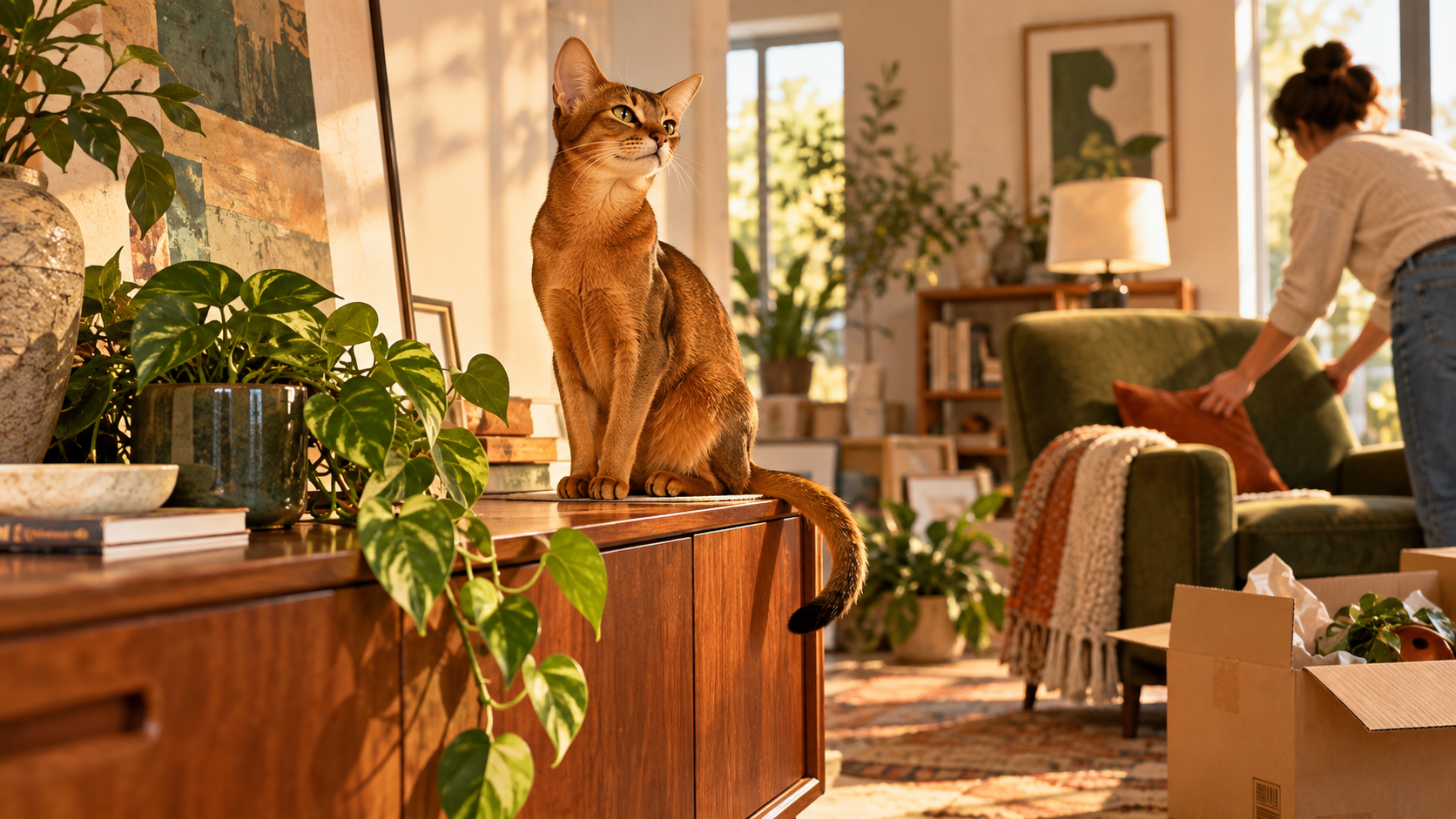
Adaptability is scored at 4 in the canonical breed data. That is a relatively strong tendency, but it should be read with the same caution as every other breed-level score. The source’s tendency disclaimer explicitly states that individual cats vary with genetics, socialization, age, health, environment, and experience. A good article therefore avoids turning “adaptability 4” into a promise that any particular Abyssinian will respond easily to any particular change.
What can be said is that adaptability is positively represented in the profile. It sits alongside sociality 4, human friendliness 4, family friendliness 4, and affection 4. Those scores create a broadly flexible social portrait, even though stranger tolerance is more moderate at 3. The profile is not describing a cat defined by extreme social withdrawal.
The editorial opportunity here is to distinguish adaptability from indifference. A highly active, curious, people-oriented cat may be interested in changes rather than simply ignoring them. That is an interpretation of the overall profile, not a new factual claim. Cats Judging Humans would describe it as a willingness to inspect revised procedures before issuing a final ruling.
That joke is useful because it preserves the breed’s active, observant character while respecting the limits of the data. Adaptability does not mean the cat approves of everything. It means the dataset gives the breed a relatively strong score in that category. The human should not confuse flexibility with a waiver of feline standards.
This section also illustrates why the source disclaimer belongs throughout the article, not only at the end. Breed profiles are summaries of tendencies across a category. They are helpful when they remain probabilistic and harmful when they are treated like scripts. An individual Abyssinian may differ significantly from the broad picture.
So the practical editorial reading is modest: the profile supports adaptability as a strength, while the individual cat remains the final authority on how any specific situation is received. In bureaucratic terms, the policy may be favorable, but implementation is local.
Independence Is Moderate, Not the Opposite of Affection
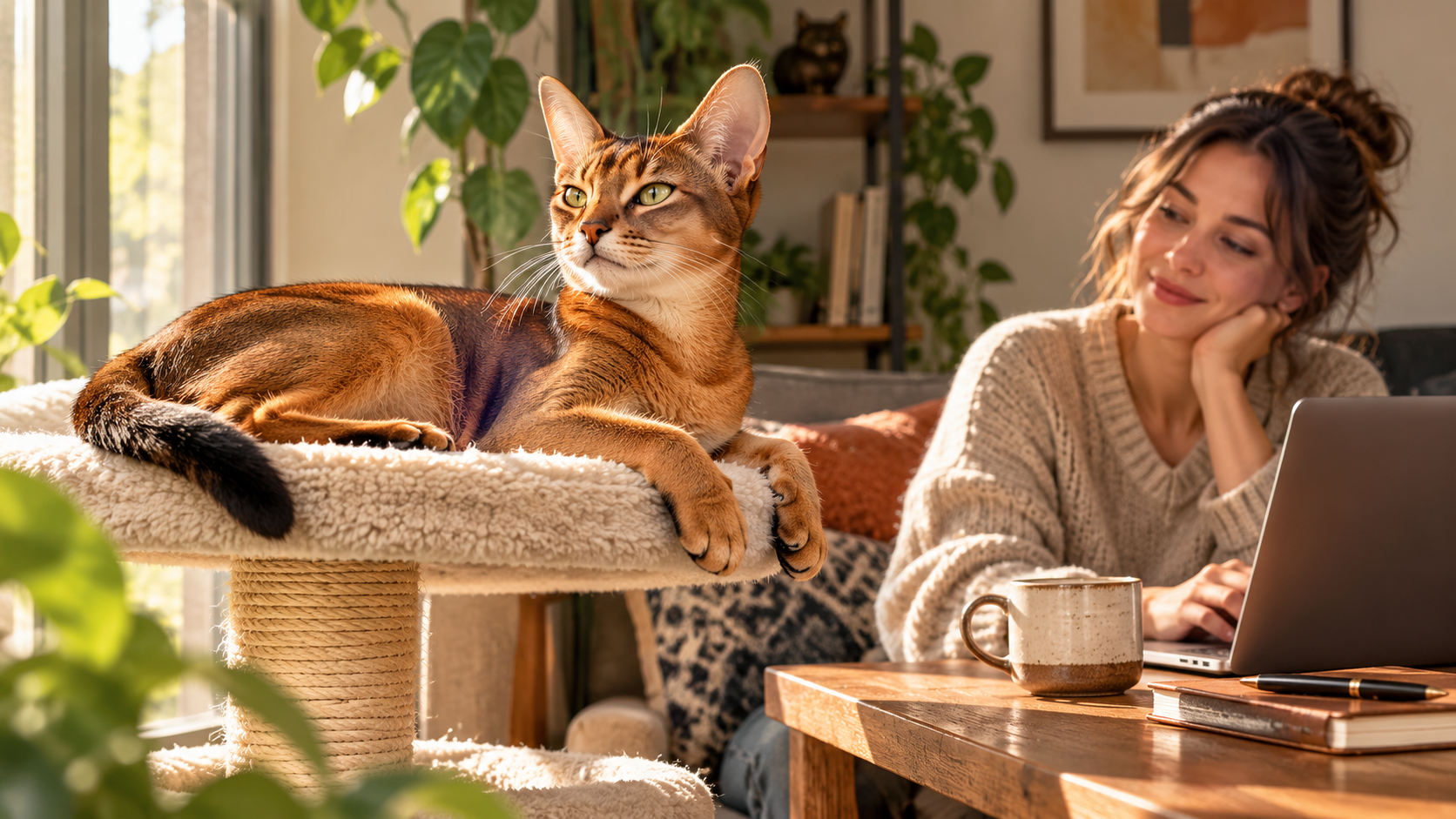
The Abyssinian’s independence score is 3, a middle-range result in this dataset. That is worth examining because it prevents the article from flattening the breed into a single social stereotype. The same profile gives affection, human friendliness, sociality, and attention need scores of 4, while describing strong bonds with people and a preference for interactive companionship. Moderate independence exists inside that strongly social picture.
The useful conclusion is not that the breed is either independent or dependent. The supplied data supports neither extreme. Instead, the profile suggests a cat that may value interaction while still retaining a meaningful degree of self-direction. That interpretation is consistent with the numbers without pretending the score tells us exactly how an individual cat will behave.
Cats Judging Humans finds this arrangement extremely convenient. The human can be needed without being promoted to decision-maker. The cat may value companionship while maintaining complete confidence that organizational authority remains feline. That is obviously editorial humor, but it captures the interesting tension in the score pattern: social connection is strong, yet independence is not absent.
This is also why the human relationship summary is so important. The source specifically says interactive companionship is often preferred over prolonged lap time. That description fits well with moderate independence because it frames closeness as active rather than purely stationary. Again, the article should not invent specific routines; the value lies in preserving the distinction already present in the source.
For readers comparing breed tendencies, a midrange independence score may be more informative than a vague label. It tells us that the profile is not built around extreme detachment, but neither does it present the cat as entirely reliant on constant contact. The Abyssinian data is more balanced than that.
The final word still belongs to the individual. Genetics, socialization, age, health, environment, and experience can shift how independence appears in real life. The CJH department therefore files the score under “moderately self-governing, strongly interested in your business.”
Family Friendliness and Sociality Are Strong, Stranger Tolerance Is More Moderate
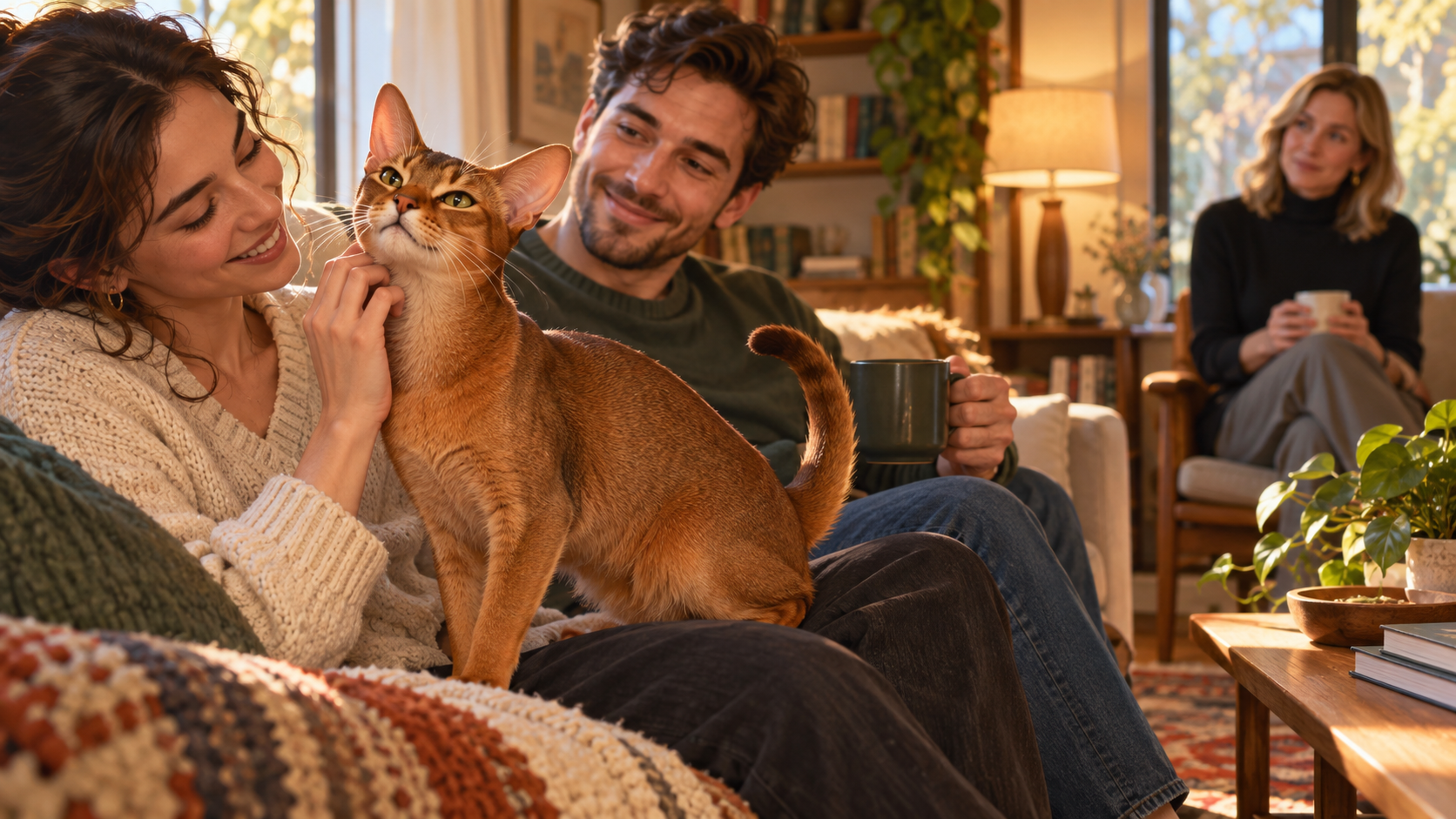
Three social scores help refine the Abyssinian profile: family friendliness is 4, sociality is 4, and stranger tolerance is 3. Human friendliness is also 4. These numbers create a picture that is broadly social and people-oriented while leaving room for more moderate responses to unfamiliar people. The distinction matters because “friendly” should not be treated as a single universal setting.
The source does not provide detailed descriptions of how Abyssinians behave with specific household members, children, visitors, or unfamiliar adults. It would therefore be inappropriate to invent those scenarios. What the profile does support is a general contrast: strong family friendliness and sociality, with stranger tolerance at the midpoint rather than the top.
Cats Judging Humans translates that into a very reasonable feline policy: established personnel may have broader access privileges than walk-ins. That is a joke, not a literal behavioral rule. It simply gives the score difference a memorable shape while preserving the factual boundaries.
The human relationship summary also supports the importance of familiar bonds. It says Abyssinians usually form strong bonds with people. That statement, paired with human friendliness and family friendliness scores of 4, makes social connection a central part of the canonical profile. At the same time, the stranger tolerance score of 3 reminds us not to overstate universal sociability.
This is another example of why nuanced data is more useful than simplistic labels. Calling a breed “social” can erase meaningful differences between familiarity, affection, attention, independence, and response to strangers. The supplied profile keeps those categories separate, and the article should do the same.
Readers should also remember that individual experience matters. Socialization and environment are specifically named in the source disclaimer, so an individual cat’s comfort with different people can vary. The breed-level scores are a tendency map, not an access-control system. The CJH version merely notes that if the Abyssinian appears to run one, humans should expect the paperwork to be reviewed.
Vocality and Grooming: What the Scores Say—and What They Do Not
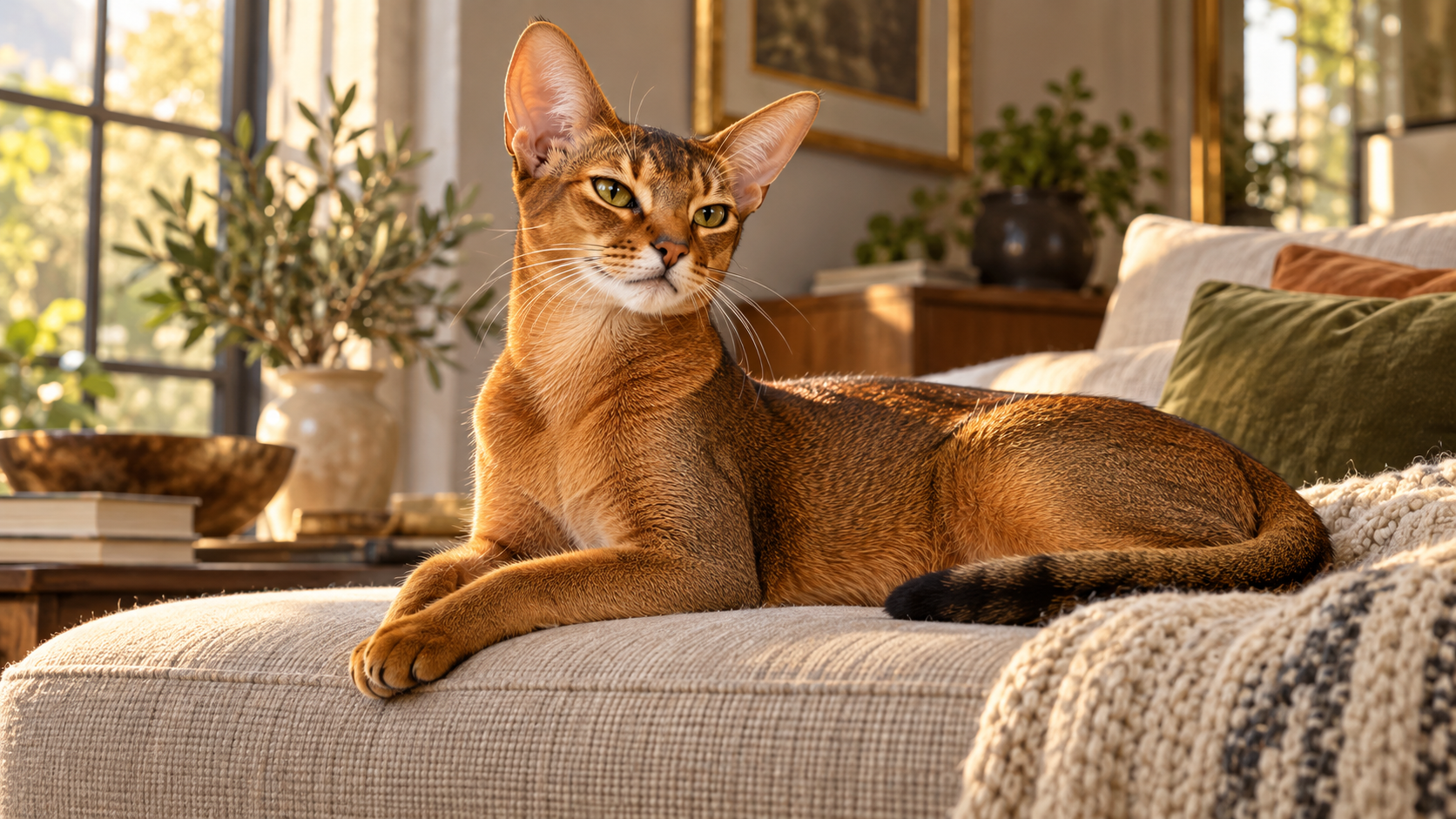
The source gives the Abyssinian a vocality score of 3 and a grooming score of 1. These are useful data points precisely because they should not be stretched beyond what they actually say. A vocality score of 3 indicates a middle-range tendency in the dataset. It does not specify the sound, frequency, volume, timing, meaning, or individual communication style of any particular cat. Similarly, a grooming score of 1 is a low score in that category, but the source does not provide detailed coat-care instructions, shedding claims, or maintenance schedules.
That boundary is important. Breed writing often becomes unreliable when a simple score is expanded into a long list of specific care claims that were never present in the source. This article avoids that. The factual statement is limited: vocality 3, grooming 1, warm ticked short coat. Anything more detailed would require additional evidence that the user explicitly prohibited us from adding.
Editorially, the midrange vocality score fits the broader theme that the Abyssinian profile communicates heavily through participation and presence, not necessarily through an extreme vocality rating. That is an interpretation of the profile, not a claim about how any individual cat communicates. Cats Judging Humans might say that some departments prefer memos; this one appears perfectly capable of simply attending every meeting.
The grooming score offers a different kind of reminder. A low score does not mean “no care required,” and the article should not present it that way. It only tells us how the dataset rates the grooming tendency relative to its own scale. Without more source detail, the responsible choice is to leave it there.
This restraint is part of what makes a source-grounded article useful. Not every field needs to be converted into an elaborate narrative. Sometimes the most accurate writing is concise: the coat is short and ticked, grooming is scored low, and vocality sits in the middle. The more colorful commentary belongs elsewhere—preferably in the judgment department, where exaggeration is labeled and the cat has already denied the human’s appeal.
Appearance Communicates Alertness Before the Personality Profile Begins
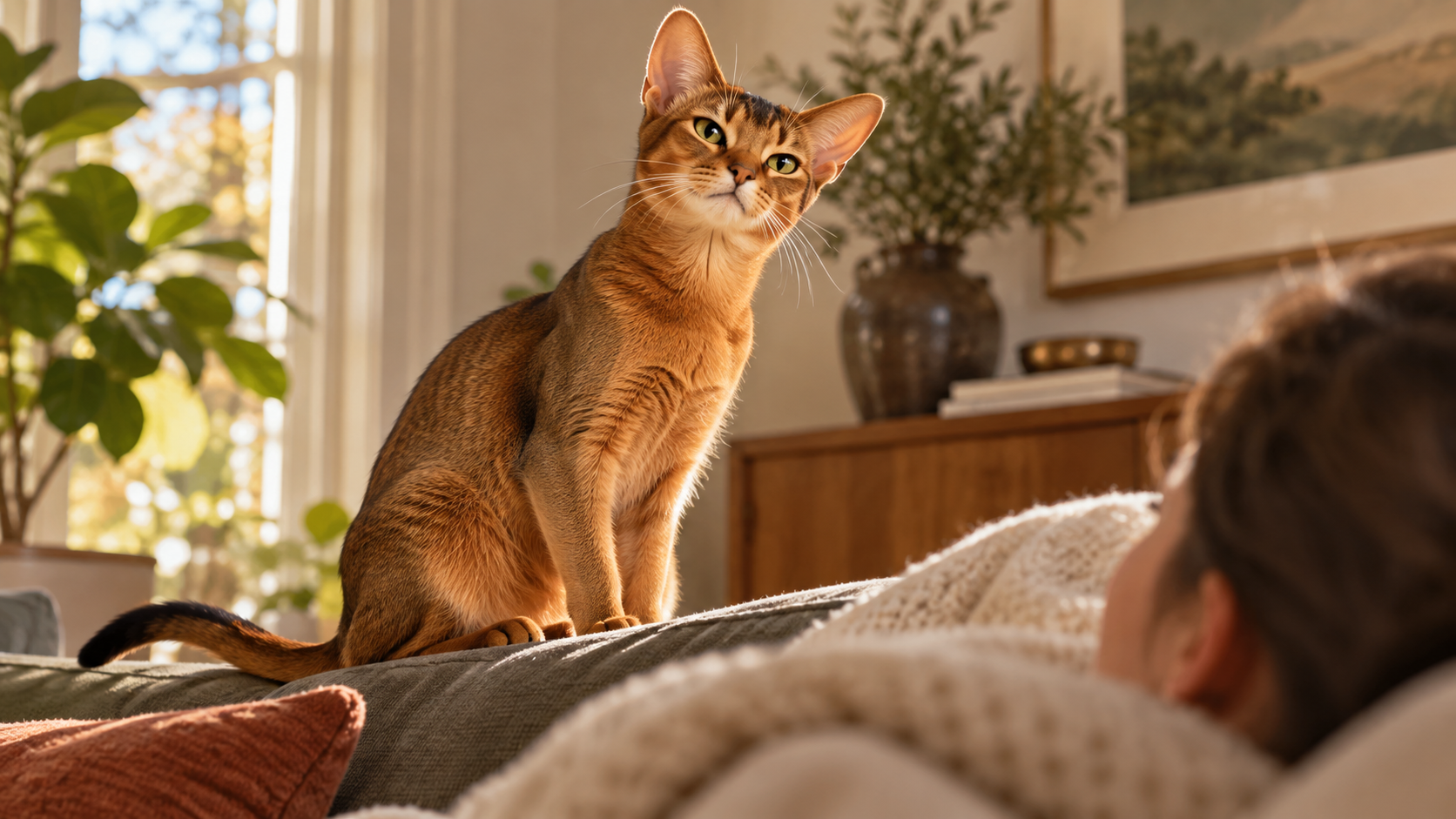
The canonical appearance identity is compact but distinctive: slender athletic build, warm ticked short coat, large ears, almond-shaped eyes, and an alert expression. Those visual elements matter because they reinforce the broader editorial impression of attention and engagement without requiring the article to invent new physical traits.
The phrase “alert expression” is especially useful. It visually aligns with the temperament summary’s emphasis on curiosity and involvement. This does not mean appearance determines personality; the source does not make that claim, and neither should the article. But from a design and editorial perspective, an alert-looking cat naturally supports the Cats Judging Humans framing. The face already appears prepared to notice something.
The large ears and almond-shaped eyes contribute to a strong, recognizable silhouette. The warm ticked short coat gives the breed profile a clear visual identity without needing elaborate ornament. Because the user asked for an evergreen breed article rather than a technical breed-standard document, the role of appearance here is to help readers connect the visual description to the tone of the profile.
Cats Judging Humans can therefore make a playful observation: the Abyssinian does not need a clipboard to look as though it has noticed a procedural irregularity. That sentence is editorial. The factual basis is simply the alert expression described in the source. The distinction remains important throughout the article.
Appearance also helps prevent the breed discussion from becoming a spreadsheet of scores. Numbers are useful, but readers often remember the combination of visual character and relationship style more easily. In this case, the picture is coherent: an alert, athletic-looking cat paired with high activity, high playfulness, curiosity, intelligence, and a strong desire for involvement.
The key is not to overread that coherence. Breed appearance is not a personality test. An individual cat can look intensely alert and be resting, or look serene and still be highly engaged. The source gives appearance and temperament as separate descriptive fields. The article lets them complement one another while keeping their meanings distinct.
The Human Compatibility Report: Strong Marks, Conditional Approval

The Cats Judging Humans profile converts the breed data into a deliberately playful “Human Compatibility Report.” Its judgment score is 4, labeled High. Human nonsense tolerance is 3, labeled Moderate. Complaint frequency is 3. Supervision tendency is 5. The editorial note attached to these metrics is explicit: they are humorous interpretations of broad breed tendencies, not scientific measurements.
That disclaimer gives the judgment framework permission to be funny without becoming misleading. A supervision score of 5 does not claim that every Abyssinian literally monitors human activity. It is a branded interpretation of the source’s strong activity, curiosity, people orientation, attention need, and involvement. Likewise, “judgment level: high” is not a clinical temperament category. It is Cats Judging Humans doing what Cats Judging Humans does.
The official verdict is the most concise synthesis in the entire profile: “Likes humans best when they are interesting, available, and capable of keeping up.” That line draws directly from the supplied tendencies. “Interesting” reflects curiosity, intelligence, playfulness, and high activity. “Available” reflects attention need, affection, sociality, and people orientation. “Capable of keeping up” reflects the strength of the activity and playfulness scores. The verdict is humorous, but its ingredients are visible in the source.
The moderate human-nonsense-tolerance score gives the profile a useful comic balance. The Abyssinian is not presented as endlessly patient with humanity, nor as completely intolerant. The midpoint leaves room for the brand’s preferred tone: mild exasperation, ongoing supervision, and the sense that humans remain employable if performance improves.
The complaint frequency score of 3 works similarly. It is not a factual prediction about vocal complaints or specific behaviors. It is an editorial setting within the CJH framework. The source’s actual vocality score is also 3, but those two numbers should not be conflated; one is a breed tendency field, the other a humorous brand metric.
Taken together, the Human Compatibility Report does not condemn the human. It issues conditional approval. That is far more dangerous, because now the human has goals.
What the Abyssinian Profile Asks of the Human Reader
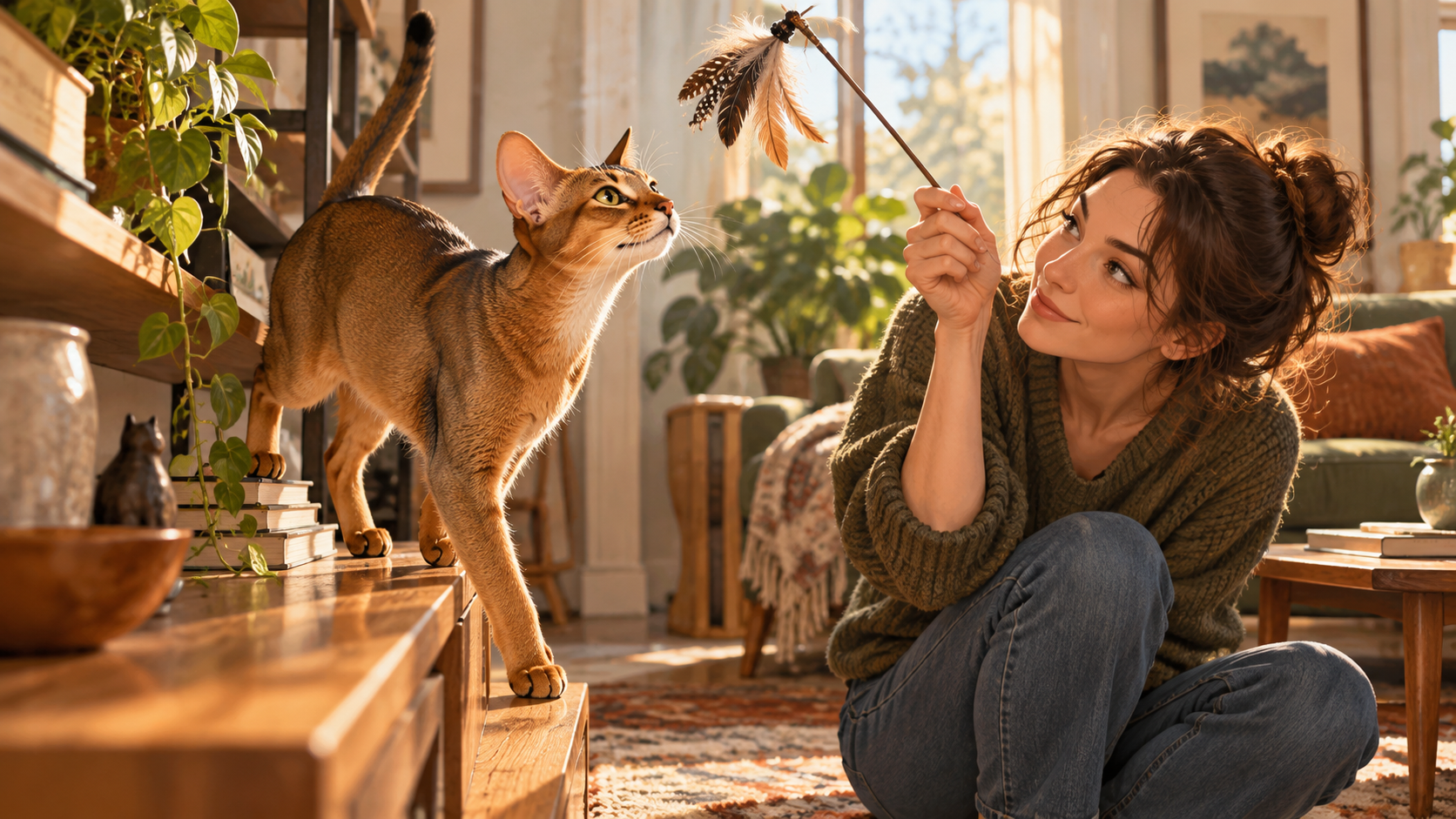
A breed article is most useful when it helps the reader understand the shape of a profile without pretending to predict an individual cat. For the Abyssinian, the supplied data repeatedly points toward engagement: high activity, high playfulness, curiosity, intelligence, people orientation, strong sociality, strong affection, and a relatively high attention need. The human relationship summary then gives that engagement a specific form by emphasizing strong bonds and interactive companionship over prolonged lap time.
The responsible conclusion is not a checklist of guaranteed behaviors. It is a question of fit between expectations. If a human imagines companionship primarily as quiet co-presence with minimal interaction, this profile may be worth reading carefully because the source emphasizes involvement and play. If a human enjoys a socially engaged, active relationship, the profile may sound more aligned. Those are interpretations of the supplied tendencies, not promises about outcome.
The adaptability score of 4 adds flexibility to the picture, while independence at 3 reminds us that strong social tendencies can coexist with a moderate degree of self-direction. Family friendliness and human friendliness at 4 support the people-oriented summary, while stranger tolerance at 3 prevents the article from making overbroad claims about universal sociability.
This is also where the tendency disclaimer becomes practically important. Genetics, socialization, age, health, environment, and experience can all shape the individual. A breed profile should inform expectations without hardening them into stereotypes. The source gives us a pattern, not a script.
Cats Judging Humans, naturally, prefers to summarize the matter as a hiring decision. The Abyssinian profile appears willing to retain humans who can remain interesting, available, and reasonably responsive to ongoing events. The position may involve interaction, observation, and occasional performance review. Benefits are unspecified. Authority remains unclear. The human should probably assume probation is permanent.
Under the joke, though, the message is straightforward: read the breed as active, curious, social, and involved, then leave enough room for the individual cat to be exactly itself.
The canonical Abyssinian profile is unusually coherent without needing exaggeration. It describes an alert-looking, slender athletic cat with a warm ticked short coat, large ears, and almond-shaped eyes, then pairs that appearance with high activity, curiosity, intelligence, playfulness, and strong people orientation. Affection, sociality, human friendliness, family friendliness, attention need, and adaptability are all scored strongly, while independence, stranger tolerance, and vocality sit in the middle range and grooming is scored low. The human relationship summary adds the key nuance: strong bonds are typical, but interactive companionship may matter more than prolonged lap time.
Cats Judging Humans turns that pattern into a playful verdict rather than pretending the breed data is destiny. The supervision score of 5, judgment score of 4, and moderate nonsense tolerance are explicitly editorial devices, not scientific measurements. They work because the factual profile already points toward involvement. The joke is simply that the Abyssinian may not be satisfied with a human who exists quietly in the background.
As always, the individual cat matters more than the stereotype. Genetics, socialization, age, health, environment, and experience can all change how these tendencies appear. So the final judgment is conditional, affectionate, and appropriately feline: humans are acceptable, provided they remain interesting, available, and capable of keeping up. Continued approval is, of course, subject to review.