
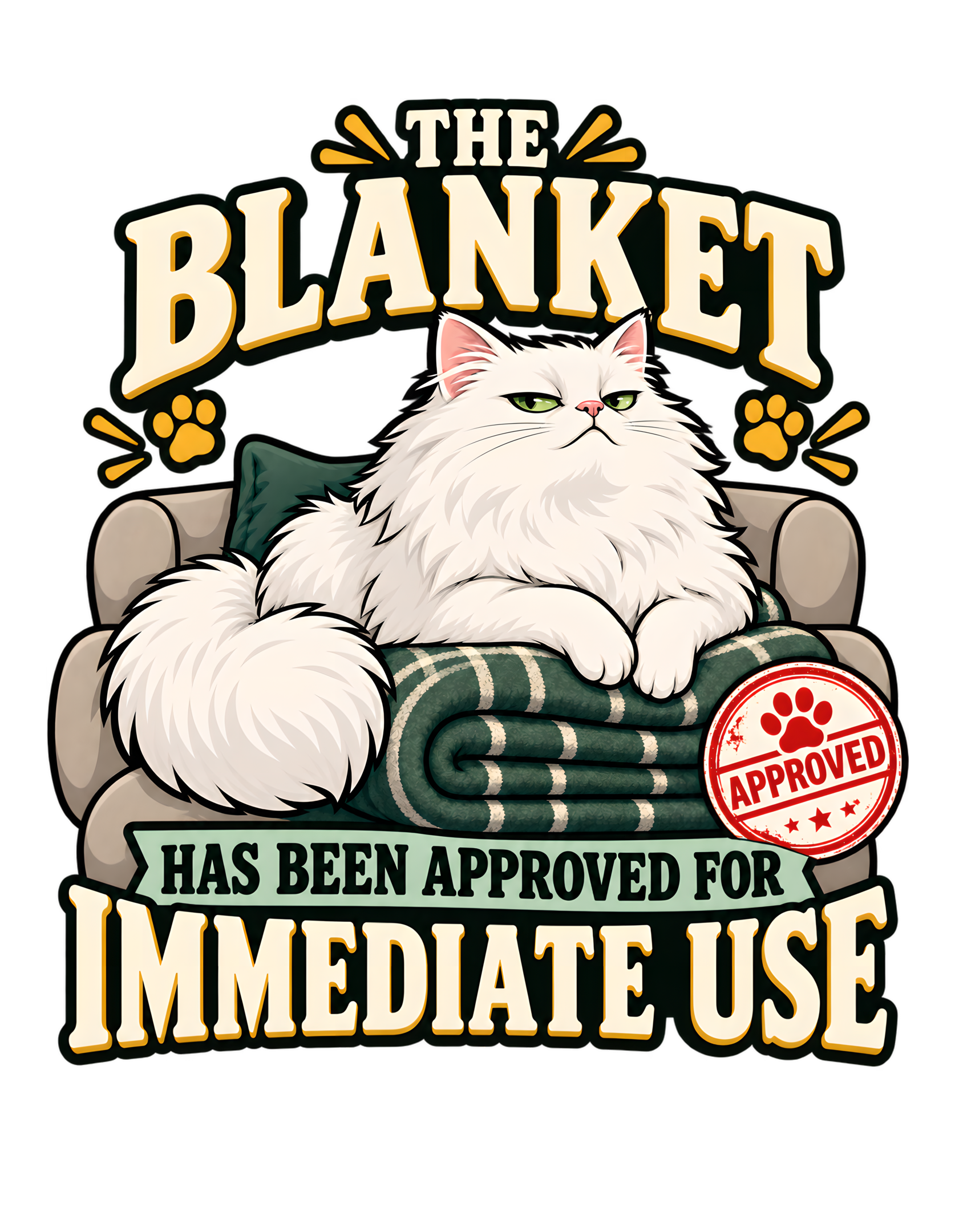
“THE BLANKET HAS BEEN APPROVED FOR IMMEDIATE USE” turns a very ordinary household event into a mock administrative decision. The approved artwork shows a fluffy white cat already settled on a neatly folded dark green blanket, with a red “APPROVED” stamp nearby and the large phrase arranged in a retro badge-style composition. The visual logic is immediate: a human placed a soft resource in the home, the cat examined the opportunity, and the matter was resolved in favor of feline use.
The canonical source describes exactly that premise. A cat treats a freshly placed blanket as a formally approved resource and occupies it before the human can use it. The visual concept specifies a fluffy white cat, a neatly folded blanket on the couch, a small approval-stamp motif, minimal couch detail, and strong typography. The finished artwork follows that direction closely while giving the cat a calm, satisfied expression that makes the approval feel less like theft and more like policy.
That distinction is where the Cats Judging Humans voice appears. The cat is not apologizing for taking over the blanket. The cat is not asking permission. The cat behaves as though the human has successfully completed a submission process and should now be pleased that the material passed inspection.
This page stays grounded in the canonical source and the exact uploaded approved artwork. It does not invent price, stock, shipping, garment colors, materials, customer ratings, or unsupported technical claims. The artwork is the factual visual authority. The editorial layer is simply the feline interpretation: the blanket was placed, reviewed, approved, and immediately put into service.
The Joke Begins With a Human Mistaking Placement for Ownership
The premise begins with a familiar domestic misunderstanding: the human thinks placing a blanket establishes use, while the cat treats placement as submission for review. The canonical source and the approved artwork support this reading directly, so the page does not need to invent a larger incident around it. The humor comes from treating a small household event with far more procedural seriousness than the event deserves. That mismatch is the central comic engine.
The neatly folded blanket sits directly beneath the fluffy white cat, making the approved resource unmistakable before the viewer reaches the wording. This matters because the design must communicate quickly. The cat, blanket, furniture, approval mark, and typography work as one compact visual system. The viewer can understand what object is under review, who has authority, and what the result was without needing a full room, a human figure, or a second scene.
The unseen person who prepared the blanket becomes the quiet loser in the exchange because the cat’s immediate occupation replaces the original plan without any visible negotiation. The absent human is still part of the story because the blanket itself records human preparation. It has been placed, folded, and presented in a domestic setting. The cat’s occupation therefore feels like a response to somebody else’s work, which turns ordinary household effort into the setup for feline judgment.
Approval language is funnier than simple ownership language because it makes feline entitlement sound procedural and almost helpful. Cats Judging Humans works best when superiority is calm rather than cruel. The cat does not need to insult anyone. Bureaucratic language makes the certainty feel official, while the cozy subject keeps the joke playful. The result is judgment without hostility and authority without melodrama.
The joke lands because the design reframes possession as policy: the cat has not stolen the blanket; the blanket has passed inspection. The concept also stays evergreen because it relies on a durable cat-owner experience rather than a trend. The human may still believe the blanket was meant for shared use, but the design presents the review as complete. The feline interpretation has already become policy.
The Fluffy White Cat Looks Like the Final Approver, Not the Recipient of a Gift
The cat’s calm, slightly unimpressed expression makes it look like the final approver rather than a grateful recipient. The canonical source and the approved artwork support this reading directly, so the page does not need to invent a larger incident around it. The humor comes from treating a small household event with far more procedural seriousness than the event deserves. That mismatch is the central comic engine.
White fur creates strong contrast against the darker green blanket and black graphic shapes, keeping the face and paws visually dominant. This matters because the design must communicate quickly. The cat, blanket, furniture, approval mark, and typography work as one compact visual system. The viewer can understand what object is under review, who has authority, and what the result was without needing a full room, a human figure, or a second scene.
Because the human is not shown presenting the blanket, the cat never looks dependent on a giver; it simply appears to occupy an already-approved resource. The absent human is still part of the story because the blanket itself records human preparation. It has been placed, folded, and presented in a domestic setting. The cat’s occupation therefore feels like a response to somebody else’s work, which turns ordinary household effort into the setup for feline judgment.
That quiet authority fits the brand better than gratitude, surprise, or mischief would, because the cat seems to assume the arrangement is correct. Cats Judging Humans works best when superiority is calm rather than cruel. The cat does not need to insult anyone. Bureaucratic language makes the certainty feel official, while the cozy subject keeps the joke playful. The result is judgment without hostility and authority without melodrama.
The final effect is not “thank you for the blanket” but “your submission has been accepted.” The concept also stays evergreen because it relies on a durable cat-owner experience rather than a trend. The human may still believe the blanket was meant for shared use, but the design presents the review as complete. The feline interpretation has already become policy.
The Folded Blanket Is the Evidence That Human Work Happened First
The blanket carries the invisible backstory because its folded, prepared state implies that a human handled it before the cat arrived. The canonical source and the approved artwork support this reading directly, so the page does not need to invent a larger incident around it. The humor comes from treating a small household event with far more procedural seriousness than the event deserves. That mismatch is the central comic engine.
Dark green color, lighter stripes, and stacked folds make the object readable as a deliberate household textile rather than an incidental patch of color. This matters because the design must communicate quickly. The cat, blanket, furniture, approval mark, and typography work as one compact visual system. The viewer can understand what object is under review, who has authority, and what the result was without needing a full room, a human figure, or a second scene.
The human contribution is therefore visible through the object itself even though no person appears in the artwork. The absent human is still part of the story because the blanket itself records human preparation. It has been placed, folded, and presented in a domestic setting. The cat’s occupation therefore feels like a response to somebody else’s work, which turns ordinary household effort into the setup for feline judgment.
Cats Judging Humans turns that preparation into evidence of service: the human created the condition, and the cat claims authority over the result. Cats Judging Humans works best when superiority is calm rather than cruel. The cat does not need to insult anyone. Bureaucratic language makes the certainty feel official, while the cozy subject keeps the joke playful. The result is judgment without hostility and authority without melodrama.
The design needs no before-and-after panel because the folded blanket already proves that somebody did the work first. The concept also stays evergreen because it relies on a durable cat-owner experience rather than a trend. The human may still believe the blanket was meant for shared use, but the design presents the review as complete. The feline interpretation has already become policy.
The APPROVED Stamp Converts Comfort Into Certification
The red “APPROVED” stamp converts the cat’s comfort into a completed administrative decision. The canonical source and the approved artwork support this reading directly, so the page does not need to invent a larger incident around it. The humor comes from treating a small household event with far more procedural seriousness than the event deserves. That mismatch is the central comic engine.
Its smaller scale and angled placement keep it secondary to the cat and phrase while still giving the scene unmistakable certification language. This matters because the design must communicate quickly. The cat, blanket, furniture, approval mark, and typography work as one compact visual system. The viewer can understand what object is under review, who has authority, and what the result was without needing a full room, a human figure, or a second scene.
For the human, the stamp is absurd because nobody requested formal authorization; for the cat, the visual logic suggests authorization was always required. The absent human is still part of the story because the blanket itself records human preparation. It has been placed, folded, and presented in a domestic setting. The cat’s occupation therefore feels like a response to somebody else’s work, which turns ordinary household effort into the setup for feline judgment.
The device fits the brand because ordinary feline behavior is being translated into paperwork, review, and procedure rather than simple cuteness. Cats Judging Humans works best when superiority is calm rather than cruel. The cat does not need to insult anyone. Bureaucratic language makes the certainty feel official, while the cozy subject keeps the joke playful. The result is judgment without hostility and authority without melodrama.
Once the stamp appears, the blanket no longer reads as merely soft; it reads as a resource that has met feline standards. The concept also stays evergreen because it relies on a durable cat-owner experience rather than a trend. The human may still believe the blanket was meant for shared use, but the design presents the review as complete. The feline interpretation has already become policy.
The Phrase Makes Immediate Occupation Sound Like Responsible Resource Management
The main phrase is effective because it sounds measured and responsible while describing nothing more than immediate feline occupation. The canonical source and the approved artwork support this reading directly, so the page does not need to invent a larger incident around it. The humor comes from treating a small household event with far more procedural seriousness than the event deserves. That mismatch is the central comic engine.
The wording breaks naturally into the object, the approval action, and the implementation timing, which the typography reinforces in separate visual layers. This matters because the design must communicate quickly. The cat, blanket, furniture, approval mark, and typography work as one compact visual system. The viewer can understand what object is under review, who has authority, and what the result was without needing a full room, a human figure, or a second scene.
The human may believe the cat moved quickly; the sentence makes the same action sound like a compliant deployment after proper review. The absent human is still part of the story because the blanket itself records human preparation. It has been placed, folded, and presented in a domestic setting. The cat’s occupation therefore feels like a response to somebody else’s work, which turns ordinary household effort into the setup for feline judgment.
That bureaucratic distance is central to the Cats Judging Humans voice because it lets the cat sound superior without sounding openly possessive. Cats Judging Humans works best when superiority is calm rather than cruel. The cat does not need to insult anyone. Bureaucratic language makes the certainty feel official, while the cozy subject keeps the joke playful. The result is judgment without hostility and authority without melodrama.
The line is therefore more distinctive than a generic “mine” joke: it converts entitlement into resource management. The concept also stays evergreen because it relies on a durable cat-owner experience rather than a trend. The human may still believe the blanket was meant for shared use, but the design presents the review as complete. The feline interpretation has already become policy.
Minimal Furniture Detail Keeps the Scene Domestic Without Becoming a Room Portrait
The chair and pillow establish a home setting without turning the design into a detailed interior illustration. The canonical source and the approved artwork support this reading directly, so the page does not need to invent a larger incident around it. The humor comes from treating a small household event with far more procedural seriousness than the event deserves. That mismatch is the central comic engine.
Minimal couch detail keeps attention on the cat, folded blanket, approval stamp, and typography while still making the behavior recognizably domestic. This matters because the design must communicate quickly. The cat, blanket, furniture, approval mark, and typography work as one compact visual system. The viewer can understand what object is under review, who has authority, and what the result was without needing a full room, a human figure, or a second scene.
Because the room is not fully defined, viewers can project their own home and their own cat onto the situation more easily. The absent human is still part of the story because the blanket itself records human preparation. It has been placed, folded, and presented in a domestic setting. The cat’s occupation therefore feels like a response to somebody else’s work, which turns ordinary household effort into the setup for feline judgment.
The brand benefits from that openness because the human behavior under review is universal preparation, not one specific décor choice. Cats Judging Humans works best when superiority is calm rather than cruel. The cat does not need to insult anyone. Bureaucratic language makes the certainty feel official, while the cozy subject keeps the joke playful. The result is judgment without hostility and authority without melodrama.
The setting is therefore just specific enough to explain the joke and just restrained enough to keep the badge composition strong. The concept also stays evergreen because it relies on a durable cat-owner experience rather than a trend. The human may still believe the blanket was meant for shared use, but the design presents the review as complete. The feline interpretation has already become policy.
The Dark Green Blanket Turns an Ordinary Soft Surface Into a Visual Throne
The dark green blanket becomes a visual platform for the white cat, giving an ordinary household object surprising authority. The canonical source and the approved artwork support this reading directly, so the page does not need to invent a larger incident around it. The humor comes from treating a small household event with far more procedural seriousness than the event deserves. That mismatch is the central comic engine.
The contrast between white fur, deep green fabric, cream furniture, and black outline makes the central subject easy to read and gives the blanket enough weight to matter. This matters because the design must communicate quickly. The cat, blanket, furniture, approval mark, and typography work as one compact visual system. The viewer can understand what object is under review, who has authority, and what the result was without needing a full room, a human figure, or a second scene.
The human sees a blanket; the cat appears to see an assigned station, which is why the resource-management joke feels complete. The absent human is still part of the story because the blanket itself records human preparation. It has been placed, folded, and presented in a domestic setting. The cat’s occupation therefore feels like a response to somebody else’s work, which turns ordinary household effort into the setup for feline judgment.
Cats Judging Humans does not need crowns or royal costumes here because ordinary household comfort already becomes a throne through feline confidence. Cats Judging Humans works best when superiority is calm rather than cruel. The cat does not need to insult anyone. Bureaucratic language makes the certainty feel official, while the cozy subject keeps the joke playful. The result is judgment without hostility and authority without melodrama.
The blanket’s role is therefore both practical and symbolic: it is comfort, evidence, territory, and approved infrastructure at once. The concept also stays evergreen because it relies on a durable cat-owner experience rather than a trend. The human may still believe the blanket was meant for shared use, but the design presents the review as complete. The feline interpretation has already become policy.
The Cat’s Stillness Makes the Decision Feel Final Rather Than Excited
The cat is shown already settled, which makes the decision feel complete instead of impulsive. The canonical source and the approved artwork support this reading directly, so the page does not need to invent a larger incident around it. The humor comes from treating a small household event with far more procedural seriousness than the event deserves. That mismatch is the central comic engine.
There is no pouncing, kneading, diving, or exaggerated motion; the still posture turns “immediate use” into the calm aftermath of a fast implementation. This matters because the design must communicate quickly. The cat, blanket, furniture, approval mark, and typography work as one compact visual system. The viewer can understand what object is under review, who has authority, and what the result was without needing a full room, a human figure, or a second scene.
For the human, that stillness makes the loss of access feel more final because the cat is not testing the blanket; it is occupying it as established policy. The absent human is still part of the story because the blanket itself records human preparation. It has been placed, folded, and presented in a domestic setting. The cat’s occupation therefore feels like a response to somebody else’s work, which turns ordinary household effort into the setup for feline judgment.
The dry brand tone depends on that composure, since certainty is funnier than celebration when the cat is acting like an authority figure. Cats Judging Humans works best when superiority is calm rather than cruel. The cat does not need to insult anyone. Bureaucratic language makes the certainty feel official, while the cozy subject keeps the joke playful. The result is judgment without hostility and authority without melodrama.
The artwork therefore captures the moment after the ruling, when the cat has nothing left to prove and the human has nothing useful left to say. The concept also stays evergreen because it relies on a durable cat-owner experience rather than a trend. The human may still believe the blanket was meant for shared use, but the design presents the review as complete. The feline interpretation has already become policy.
The Typography Creates a Clear Approval Sequence Across the Design
The typography organizes the phrase into a clear approval sequence that can be read quickly. The canonical source and the approved artwork support this reading directly, so the page does not need to invent a larger incident around it. The humor comes from treating a small household event with far more procedural seriousness than the event deserves. That mismatch is the central comic engine.
“THE” introduces the subject, “BLANKET” dominates the top, the green banner carries the approval language, and “IMMEDIATE USE” anchors the bottom. This matters because the design must communicate quickly. The cat, blanket, furniture, approval mark, and typography work as one compact visual system. The viewer can understand what object is under review, who has authority, and what the result was without needing a full room, a human figure, or a second scene.
That hierarchy mirrors the human experience of the joke: identify the blanket, discover that it has been approved, then realize the cat has already implemented the decision. The absent human is still part of the story because the blanket itself records human preparation. It has been placed, folded, and presented in a domestic setting. The cat’s occupation therefore feels like a response to somebody else’s work, which turns ordinary household effort into the setup for feline judgment.
The brand voice benefits from the formal typographic structure because the wording sounds like policy rather than a casual caption. Cats Judging Humans works best when superiority is calm rather than cruel. The cat does not need to insult anyone. Bureaucratic language makes the certainty feel official, while the cozy subject keeps the joke playful. The result is judgment without hostility and authority without melodrama.
The type is therefore not decoration added around the cat; it is the administrative framework that makes the cat’s behavior feel official. The concept also stays evergreen because it relies on a durable cat-owner experience rather than a trend. The human may still believe the blanket was meant for shared use, but the design presents the review as complete. The feline interpretation has already become policy.
The Retro Badge Format Makes the Blanket Look Officially Certified
The retro badge format turns the entire composition into a mock certification emblem. The canonical source and the approved artwork support this reading directly, so the page does not need to invent a larger incident around it. The humor comes from treating a small household event with far more procedural seriousness than the event deserves. That mismatch is the central comic engine.
The cat, blanket, stamp, furniture, and typography remain inside one compact silhouette, which gives the design the visual unity of an official mark without copying a real institution. This matters because the design must communicate quickly. The cat, blanket, furniture, approval mark, and typography work as one compact visual system. The viewer can understand what object is under review, who has authority, and what the result was without needing a full room, a human figure, or a second scene.
For the human, the badge exaggerates a trivial household event into something worthy of formal recognition. The absent human is still part of the story because the blanket itself records human preparation. It has been placed, folded, and presented in a domestic setting. The cat’s occupation therefore feels like a response to somebody else’s work, which turns ordinary household effort into the setup for feline judgment.
That exaggeration is exactly on-brand because Cats Judging Humans often treats ordinary feline preferences as binding standards. Cats Judging Humans works best when superiority is calm rather than cruel. The cat does not need to insult anyone. Bureaucratic language makes the certainty feel official, while the cozy subject keeps the joke playful. The result is judgment without hostility and authority without melodrama.
The design feels finished because the badge structure makes every element part of the same ruling rather than a collection of unrelated jokes. The concept also stays evergreen because it relies on a durable cat-owner experience rather than a trend. The human may still believe the blanket was meant for shared use, but the design presents the review as complete. The feline interpretation has already become policy.
The Humor Comes From Human Effort Becoming Feline Infrastructure
The deeper joke is that human preparation becomes feline infrastructure almost immediately. The canonical source and the approved artwork support this reading directly, so the page does not need to invent a larger incident around it. The humor comes from treating a small household event with far more procedural seriousness than the event deserves. That mismatch is the central comic engine.
The artwork implies that somebody placed and folded the blanket, but the cat receives the benefit and the authority to approve it. This matters because the design must communicate quickly. The cat, blanket, furniture, approval mark, and typography work as one compact visual system. The viewer can understand what object is under review, who has authority, and what the result was without needing a full room, a human figure, or a second scene.
That makes the human useful without making the human central: labor happens offstage, while feline interpretation gets the visible credit. The absent human is still part of the story because the blanket itself records human preparation. It has been placed, folded, and presented in a domestic setting. The cat’s occupation therefore feels like a response to somebody else’s work, which turns ordinary household effort into the setup for feline judgment.
Cats Judging Humans uses that status reversal affectionately; the human is not worthless, merely employed by a system they did not realize existed. Cats Judging Humans works best when superiority is calm rather than cruel. The cat does not need to insult anyone. Bureaucratic language makes the certainty feel official, while the cozy subject keeps the joke playful. The result is judgment without hostility and authority without melodrama.
The blanket becomes funny because it represents a broader household pattern in which human effort is continuously reclassified as cat service. The concept also stays evergreen because it relies on a durable cat-owner experience rather than a trend. The human may still believe the blanket was meant for shared use, but the design presents the review as complete. The feline interpretation has already become policy.
The Missing Human Lets Every Viewer Become the Person Who Lost the Blanket
Leaving the human out of the artwork makes the joke more personal because the viewer can occupy the absent role. The canonical source and the approved artwork support this reading directly, so the page does not need to invent a larger incident around it. The humor comes from treating a small household event with far more procedural seriousness than the event deserves. That mismatch is the central comic engine.
The prepared blanket proves that a human action occurred, while the cat’s settled posture shows the result without needing a reaction shot. This matters because the design must communicate quickly. The cat, blanket, furniture, approval mark, and typography work as one compact visual system. The viewer can understand what object is under review, who has authority, and what the result was without needing a full room, a human figure, or a second scene.
That omission avoids tying the concept to one age, gender, or household character and keeps the visual focus completely on feline authority. The absent human is still part of the story because the blanket itself records human preparation. It has been placed, folded, and presented in a domestic setting. The cat’s occupation therefore feels like a response to somebody else’s work, which turns ordinary household effort into the setup for feline judgment.
The brand relationship survives because the cat is still clearly judging a human-created situation even when the person is off-frame. Cats Judging Humans works best when superiority is calm rather than cruel. The cat does not need to insult anyone. Bureaucratic language makes the certainty feel official, while the cozy subject keeps the joke playful. The result is judgment without hostility and authority without melodrama.
The viewer therefore supplies the missing emotion themselves: resignation, amusement, disbelief, or the familiar realization that the blanket was never really theirs. The concept also stays evergreen because it relies on a durable cat-owner experience rather than a trend. The human may still believe the blanket was meant for shared use, but the design presents the review as complete. The feline interpretation has already become policy.
The Design Stays Evergreen Because Soft-Surface Claims Do Not Need a Trend Cycle
The concept is evergreen because it depends on a durable cat-owner experience rather than a topical reference. The canonical source and the approved artwork support this reading directly, so the page does not need to invent a larger incident around it. The humor comes from treating a small household event with far more procedural seriousness than the event deserves. That mismatch is the central comic engine.
There are no holidays, apps, celebrities, current events, or temporary slang inside the artwork, and the blanket itself is generic enough to avoid seasonal dependence. This matters because the design must communicate quickly. The cat, blanket, furniture, approval mark, and typography work as one compact visual system. The viewer can understand what object is under review, who has authority, and what the result was without needing a full room, a human figure, or a second scene.
The human behavior is equally timeless: preparing a comfortable surface and assuming the original intention will survive contact with a cat. The absent human is still part of the story because the blanket itself records human preparation. It has been placed, folded, and presented in a domestic setting. The cat’s occupation therefore feels like a response to somebody else’s work, which turns ordinary household effort into the setup for feline judgment.
Cats Judging Humans can keep returning to that dynamic because the administrative framing gives a familiar behavior a distinctive brand voice without relying on novelty alone. Cats Judging Humans works best when superiority is calm rather than cruel. The cat does not need to insult anyone. Bureaucratic language makes the certainty feel official, while the cozy subject keeps the joke playful. The result is judgment without hostility and authority without melodrama.
The design should remain understandable as long as humans keep arranging comfort and cats keep acting as though those arrangements require feline approval. The concept also stays evergreen because it relies on a durable cat-owner experience rather than a trend. The human may still believe the blanket was meant for shared use, but the design presents the review as complete. The feline interpretation has already become policy.
The Approved Production Asset Is the Final Visual Authority for the Website
The source identifies the approved production asset as an immutable PNG master, which makes the finished artwork the factual visual authority for this page. The canonical source and the approved artwork support this reading directly, so the page does not need to invent a larger incident around it. The humor comes from treating a small household event with far more procedural seriousness than the event deserves. That mismatch is the central comic engine.
The page can describe the fluffy white cat, folded dark green blanket, armchair, green pillow, red approval stamp, and visible phrase because those elements are actually present. This matters because the design must communicate quickly. The cat, blanket, furniture, approval mark, and typography work as one compact visual system. The viewer can understand what object is under review, who has authority, and what the result was without needing a full room, a human figure, or a second scene.
What the page should not do is invent alternate compositions, garment properties, colors, materials, or consumer-facing production claims that the source does not support. The absent human is still part of the story because the blanket itself records human preparation. It has been placed, folded, and presented in a domestic setting. The cat’s occupation therefore feels like a response to somebody else’s work, which turns ordinary household effort into the setup for feline judgment.
The brand benefits from that discipline because editorial copy can expand the idea without reopening an artwork decision that has already been finalized. Cats Judging Humans works best when superiority is calm rather than cruel. The cat does not need to insult anyone. Bureaucratic language makes the certainty feel official, while the cozy subject keeps the joke playful. The result is judgment without hostility and authority without melodrama.
The website therefore interprets the approved design; it does not redesign it, correct it, or compete with it. The concept also stays evergreen because it relies on a durable cat-owner experience rather than a trend. The human may still believe the blanket was meant for shared use, but the design presents the review as complete. The feline interpretation has already become policy.
The Marketplace Listing Confirms the Core Reading Without Turning the Page Into Sales Copy
The published listing description confirms the intended reading: a fluffy white cat formally approves a fresh blanket and immediately occupies it. The canonical source and the approved artwork support this reading directly, so the page does not need to invent a larger incident around it. The humor comes from treating a small household event with far more procedural seriousness than the event deserves. That mismatch is the central comic engine.
That source is useful because it verifies the joke’s intended meaning, but the website page has room to discuss how the image, stamp, posture, blanket, typography, and missing human create that meaning. This matters because the design must communicate quickly. The cat, blanket, furniture, approval mark, and typography work as one compact visual system. The viewer can understand what object is under review, who has authority, and what the result was without needing a full room, a human figure, or a second scene.
The listing handles the marketplace function, while the editorial page explains the concept without making unsupported claims about stock, price, shipping, garment options, or ratings. The absent human is still part of the story because the blanket itself records human preparation. It has been placed, folded, and presented in a domestic setting. The cat’s occupation therefore feels like a response to somebody else’s work, which turns ordinary household effort into the setup for feline judgment.
Cats Judging Humans stays stronger when the page is not padded with sales language and instead treats the design as a piece of brand storytelling. Cats Judging Humans works best when superiority is calm rather than cruel. The cat does not need to insult anyone. Bureaucratic language makes the certainty feel official, while the cozy subject keeps the joke playful. The result is judgment without hostility and authority without melodrama.
The CTA may invite readers to view the published design on Zazzle, but the article itself remains a standalone interpretation of the joke. The concept also stays evergreen because it relies on a durable cat-owner experience rather than a trend. The human may still believe the blanket was meant for shared use, but the design presents the review as complete. The feline interpretation has already become policy.
The Design Fits Cats Judging Humans by Turning Comfort Into Feline Policy
The design fits Cats Judging Humans because it turns ordinary comfort into feline policy. The canonical source and the approved artwork support this reading directly, so the page does not need to invent a larger incident around it. The humor comes from treating a small household event with far more procedural seriousness than the event deserves. That mismatch is the central comic engine.
The cat is not merely using a blanket; it appears to govern the conditions under which the blanket may be used, and the approval stamp formalizes that imagined authority. This matters because the design must communicate quickly. The cat, blanket, furniture, approval mark, and typography work as one compact visual system. The viewer can understand what object is under review, who has authority, and what the result was without needing a full room, a human figure, or a second scene.
For the human, the joke is the reversal of status: preparation belongs to the person, but interpretation and final control belong to the cat. The absent human is still part of the story because the blanket itself records human preparation. It has been placed, folded, and presented in a domestic setting. The cat’s occupation therefore feels like a response to somebody else’s work, which turns ordinary household effort into the setup for feline judgment.
That is exactly the brand’s preferred tone—dry, clever, judgmental, playful, slightly superior, and never genuinely hostile. Cats Judging Humans works best when superiority is calm rather than cruel. The cat does not need to insult anyone. Bureaucratic language makes the certainty feel official, while the cozy subject keeps the joke playful. The result is judgment without hostility and authority without melodrama.
The final reversal is complete when the human thinks the cat took the blanket while the cat appears to think the human successfully delivered an approved blanket. The concept also stays evergreen because it relies on a durable cat-owner experience rather than a trend. The human may still believe the blanket was meant for shared use, but the design presents the review as complete. The feline interpretation has already become policy.
“THE BLANKET HAS BEEN APPROVED FOR IMMEDIATE USE” succeeds because every visible element supports one clean domestic judgment. The fluffy white cat supplies calm authority. The neatly folded dark green blanket makes the resource unmistakable. The simplified armchair establishes a home setting without clutter. The red “APPROVED” stamp converts comfort into certification. The retro badge composition makes the entire decision look official. The typography delivers the final ruling with exactly the right level of administrative seriousness.
The canonical source and marketplace description support the same reading: a fresh soft surface appears, the cat claims it immediately, and the familiar cat-owner moment becomes dry approval humor.
That is the Cats Judging Humans relationship in miniature. Humans prepare. Cats evaluate. Humans assume shared access. Cats clarify policy.
The page does not need to invent a larger story because the approved artwork already contains the full one. A resource entered the household. The cat completed the inspection. The resource passed. The human may file a request for future blanket access when the current authorized user vacates the premises.
For now, the blanket is doing exactly what the feline review process determined it should do. The approval is visible, the occupant is settled, and further human interpretation appears unnecessary.